My dad’s a gardener. His hands read like a map of hard work, sacrifice, and love. But my rich classmate only saw the dirt under his nails and called them “disgusting.” The night she mocked him at prom, those same hands took the microphone — and taught her a lesson she’d never forget.
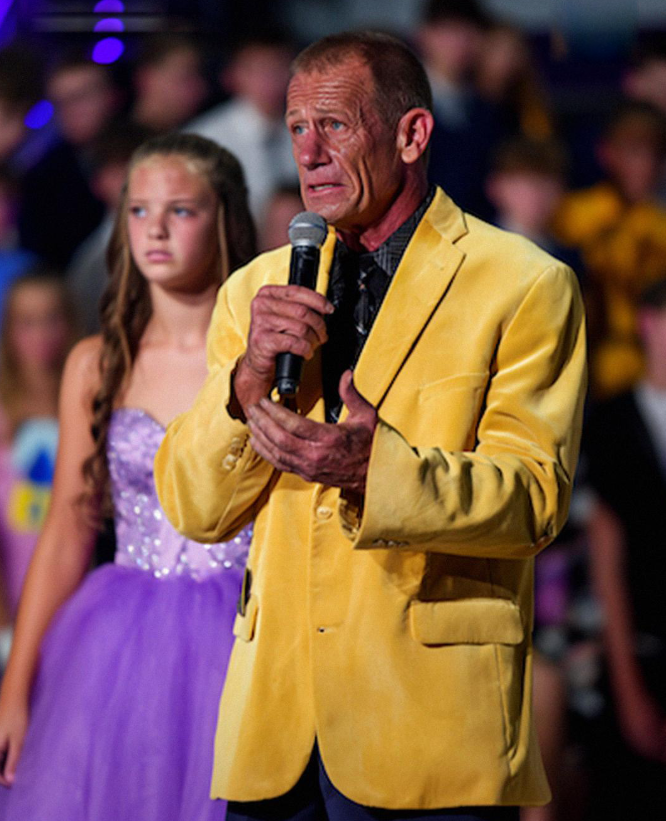
My name is Selena. I’m 17. My dad, Billy, has been a gardener my whole life. My mom died when I was twelve, so it’s just the two of us. We don’t have much money, but we have each other — and pride in what we do.
Every morning at five he leaves in worn boots and an old baseball cap. Every evening he comes home with soil in the lines of his palms and dirt stubbornly lodged under his nails.
I help him on weekends. We plant roses for Mrs. Chen, trim hedges at Riverside Park, and build flower beds that make our block look like a glossy magazine spread. My hands get filthy too — and I don’t mind.
Dad scrubs with that orange soap that promises to cut through grease, but the earth stays. It settles into the lines of his skin as if it belongs there.
“It’s honest work, Selena,” he says when I catch him studying his hands in the mirror. “Nothing to be ashamed of.”
I believed him. Taylor didn’t.
“She looks like she crawled out of a garden,” Taylor whispered to her friends at lunch last Tuesday. She lived in Willowbrook Estates, where someone else keeps the lawns perfect and someone else polishes the windows. Her dad’s law firm paid for all of that polish. Since freshman year she’d been picking at me — little snide comments about thrift store clothes, jokes about smelling like fertilizer. Careful enough to avoid teacher trouble, loud enough to sting.
Last week I forgot my lunch. Dad drove it to school. I watched him through the cafeteria window — sweating, hands streaked with dirt, every step toward the building a quiet act of love.
Taylor saw him too. “Oh my God,” she said loud enough to pull half the room’s attention. “Is that your dad? Ew, look at those hands. They’re DISGUSTING!”
Heat rose in my face. Laughter spilled across tables. “How do you even hug him?” she said, louder still. “Those nails are revolting.”
I wanted to disappear. I wanted to snap. I wanted to tell her that those same hands had built the gardens she walked past to tennis practice. But I sat frozen, swallowing my shame.
Dad showed up at our table a few minutes later with a brown paper bag and a warm smile, blissfully unaware of the laughter. “Here you go, sweetheart,” he said, handing me my lunch. He kissed the top of my head and left. I folded into an empty corner, the giggles trailing me like a cloud.
Prom night came. For weeks Dad talked about the father-daughter dance; he even bought a new shirt. He scrubbed his hands more than usual that evening, but the dirt held fast under his nails.
“You look beautiful,” he told me when I came downstairs in a modest dress from a consignment shop. His eyes shone like I was wearing diamonds.
The gym glittered with silver streamers and white lights. Dad and I sat near the back, away from Taylor. Distance didn’t matter.
Halfway through the father-daughter dance Taylor shouted across the room, “GUYS, LOOK AT HER DAD’S HANDS! I CAN’T BELIEVE SHE BROUGHT HIM TO PROM!”
Her words landed like a blow. Dad’s steps stumbled; I felt his grip on my hand tighten.
“How do you even stand TOUCHING him?” she yelled. Laughter rippled. Faces turned.
Something inside me snapped. I leaned in and whispered five words that changed everything: “She lost her dad, too.”
Dad stopped. Understanding washed over his face. Earlier I’d overheard Taylor’s mom telling another parent that Taylor’s father had died in a car accident three years before; Taylor believed she’d argued with him that morning and carried that guilt like a weight. Her cruelty, I realized, was a mask for grief.
Without hesitation Dad walked to the stage, took the microphone, and the music died. The gym went silent.
“Excuse me,” he said, calm and steady. “Taylor, would you honor me with a dance?”
Every head turned. Taylor’s face went white. Dad stepped off the stage, his boots squeaking against the polished floor. He extended his calloused hand.
“I’d be grateful for the chance,” he added softly.
She accepted. They danced to “Wonderful Tonight” while three hundred people watched in stunned silence. Dad spoke quietly into her ear; the tough girl who had taunted me melted into someone small and broken. Tears ran down her cheeks.
When the song ended, Dad opened his bag and brought out a small bouquet — roses and baby’s breath he’d cut fresh from our backyard that morning.
“These were meant for my daughter,” he announced, holding the flowers up. “But I want to give them to you. You see flowers every day — I want you to know how much care it takes to make them beautiful.”
Taylor took the bouquet with trembling hands and couldn’t speak. The arrogance was gone; in its place was raw grief. “I’m sorry,” she whispered.
Dad smiled gently. “We all miss people we love. That’s what makes us human.”
The ride home was quiet. Dad kept his eyes on the road while I watched his expression work through hurt and compassion.
“How did you know?” he asked.
“I overheard her mom,” I said. “Taylor blames herself. She’s been lashing out.”
“Anger’s easier than grief,” he replied.
Three days later, Taylor came to our door with her mom, both of them awkward and nervous. Her mother placed a pair of gardening gloves in Taylor’s hands.
“Taylor has something to say,” her mom announced.
“I’m sorry,” Taylor said, voice shaking. “I was cruel. I want to make it right.”
Her mom explained the plan: Taylor would work in our garden after school for a few weeks, learn the work her hands had mocked, and see what those “disgusting” hands actually did.
Her first day, she complained constantly about dirt under her nails and grimaced at mud on her palms. But when Dad showed her a packet of marigold seeds and explained how tiny they started, I saw something shift. Curiosity replaced complaint. “I never knew they started so small,” she breathed, wiping her hands on an old towel.
Dad taught her to water gently, to handle new shoots with patience. Her questions turned earnest. Three days since prom, she isn’t the same Taylor. She’s trying — awkwardly, honestly — and it’s changing her.
Last night she sat on our porch with soil under her nails for the first time and looked at her hands like they belonged to her. “I think I get it now,” she said, surprising herself.
I smiled. She’s still learning. Growth takes time.
Those “disgusting” hands she mocked are teaching her how real strength looks — quiet, steady, and generous. They show how beauty grows out of care and work, not privilege.
Taylor’s not finished changing, but I see more kindness in her eyes. Maybe that’s the greatest lesson Dad’s hands can teach: meaningful growth takes patience — and it’s worth the wait.