My name is Kenya Matthews. I’m 32 years old, a criminal defense attorney, and for more than a decade I’ve sat in courtrooms listening to people explain why they hurt someone. I thought I understood monsters.
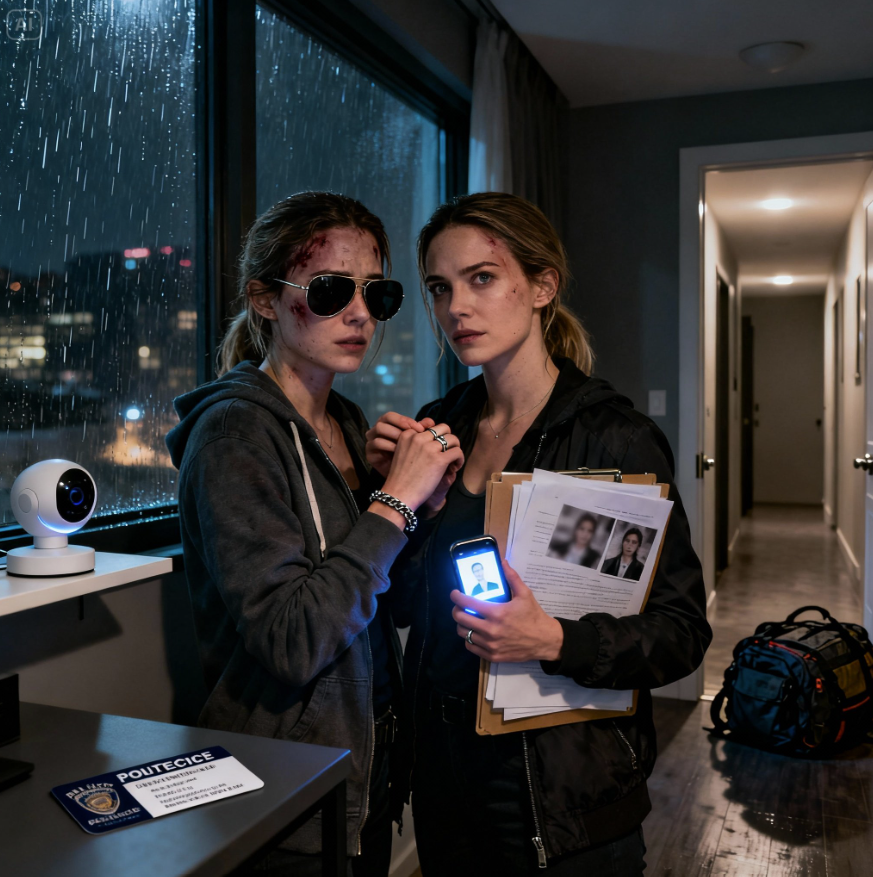
I didn’t realize how close one had been living to my own family.
Three days ago, my twin sister, Kesha, showed up at my office without an appointment. My secretary’s voice came over the intercom, tight with concern.
“Kenya… your sister is here. She doesn’t look okay.”
When I opened the door, I froze.
Kesha wore sunglasses indoors. Long sleeves in the middle of summer. A high collar that made no sense in the heat. She moved like every step hurt. At first I barely recognized her—not because her face had changed, but because the light in it was gone, dimmed like someone had slowly turned down her soul.
I locked the door behind us. “Take off the sunglasses,” I said, surprised by the sharpness in my own voice.
She shook her head as tears slid down her cheeks. That’s when I noticed the bruising along her neck—finger-shaped, unmistakable. My chest tightened. I reached up and removed the sunglasses myself.
Her eye was swollen shut. Her lip split. A cut traced her cheekbone, untreated. But the worst part was her expression—not fear, not anger, just exhaustion. The look of someone who had carried terror for so long her body had learned to live with it.
“Who did this?” I asked.
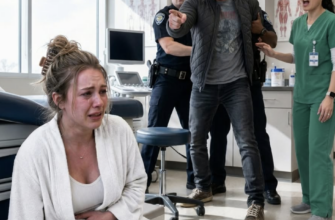
She whispered, “Please don’t call the police. He said he’ll kill me if I tell anyone.”
I stepped closer. “Roll up your sleeves.”
She hesitated. That hesitation said everything.
Old bruises faded into newer ones, a timeline written across her skin. My hands went cold.
“How long?”
“Three years,” she said quietly. “It started after we got married. He isolated me. Controlled everything. And last night… he scared Aaliyah.”
My niece. Five years old.
Then she said the name I already knew.
“Marcus. My husband.”
Something inside me snapped—not into rage, but into a clean, dangerous calm.
“You’re not going back there today,” I told her.
“I can’t leave,” she whispered. “He’ll find me.”
I looked at my identical twin—my other half—and made a decision that would change both our lives.
“Then we don’t leave the way he expects,” I said.
When she asked what I meant, I leaned in.
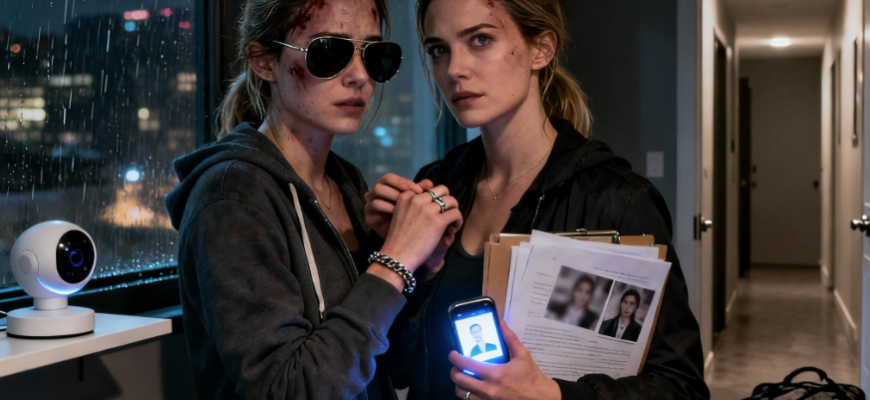
“We’re going to switch places.”
Her eyes widened in shock. “Kenya, no. He’s dangerous. He’ll hurt you.”
“I’m not doing this with my fists,” I said calmly. “I’m doing it with evidence, planning, and leverage.”
Anger burns fast. Strategy holds.
I moved quickly. I put Kesha in a hotel under my name. I called in favors—a trauma-informed therapist, a family-law colleague, a domestic violence advocate. Kesha kept apologizing for needing help. I stopped her every time.
“This is not your fault,” I told her. “His violence belongs to him.”
That night, I went to her house looking exactly like her. Same face. Same height. Same voice. I wore her clothes and copied her posture—small, careful, quiet. It made my stomach twist. Shrinking wasn’t who she was. It was how she survived.
The house looked normal: clean counters, family photos, a child’s shoes by the door. But the air felt tight, like a storm everyone had learned to expect.
Marcus’s mother acted like she owned the place. His sister spoke to me like I was invisible. I listened. I watched. I memorized routines.
Aaliyah came downstairs slowly, eyes scanning my face for danger. She didn’t run to me—she approached carefully. That broke something in me.
When Marcus came home, he didn’t charm. He controlled. Complained. Corrected. Tested boundaries. I gave him nothing emotional. No confrontation. No reaction he could twist.
My goal wasn’t to win an argument.
It was to get Kesha out for good.
Over the next two days, I gathered what the system actually responds to: documentation. Photos of hidden injuries. Threatening messages. Financial records showing control. Statements from neighbors who heard the shouting. Everything organized. Everything timed.
On the third day, Kesha sat across from me—safe, rested, finally sleeping—and I set a stack of folders on the table.
“We’re done begging,” I said. “We’re filing.”
Her eyes filled. “What if he retaliates?”
“Then he does it with a court order on his back and a spotlight on his name.”
My phone buzzed. Marcus. Calling from Kesha’s number.
I answered in her soft voice.
“Where are you?” he demanded.
“Not where you can reach her,” I said calmly.
Silence. Then calculation.
“I’m coming,” he said. “Tell her I’m coming.”
I hung up.
“We move with support,” I told Kesha. “Not panic.”
That afternoon, we filed for an emergency protective order and emergency custody. We notified Aaliyah’s school. We locked every door he’d used before.
When Marcus showed up at my office, security stopped him in the lobby. He made a scene. It didn’t work.
Two days later, in a courtroom that smelled like old paper and truth, Marcus played the devoted husband. Stress. Misunderstandings. How “emotional” she’d been.
The judge reviewed the evidence.
The protective order was granted.
Emergency custody too.
Kesha made a sound halfway between a sob and a breath—as if she’d just surfaced from deep water.
That night, Aaliyah slept without flinching. Kesha whispered, “We’re safe,” like she was learning new words.
Courage isn’t always loud. Sometimes it’s paperwork, planning, and one steady no.
In the weeks that followed, Kesha rebuilt slowly. A new number. Therapy that asked, “What happened to you?” instead of “Why didn’t you leave?”
Marcus tried to reach her through others. Every attempt failed against something he’d never faced before: boundaries with consequences.
Aaliyah changed too. She laughed freely. She slept deeply. One day she said, “Aunt Kenya… Mommy doesn’t cry in the bathroom anymore.”
I had to turn away.
People want clean endings. Real life is messier.
Sometimes justice is a court order. Sometimes victory is a child sleeping peacefully. Sometimes it’s a woman recognizing herself again.
Kesha didn’t need a hero. She needed belief, support, and a plan.
And for anyone who needs to hear it: if someone is hurting you, it isn’t love. It’s control. You deserve safety—and a way out.
This time, my sister isn’t going back.