I Was Kneeling at My Daughter’s Grave When My Wife Whispered, “You Have to Let Her Go.” That Night, a Voice Outside My Window Said, “Dad… Please Let Me In,” and Everything I Believed About Her Death—and My Family—Collapsed
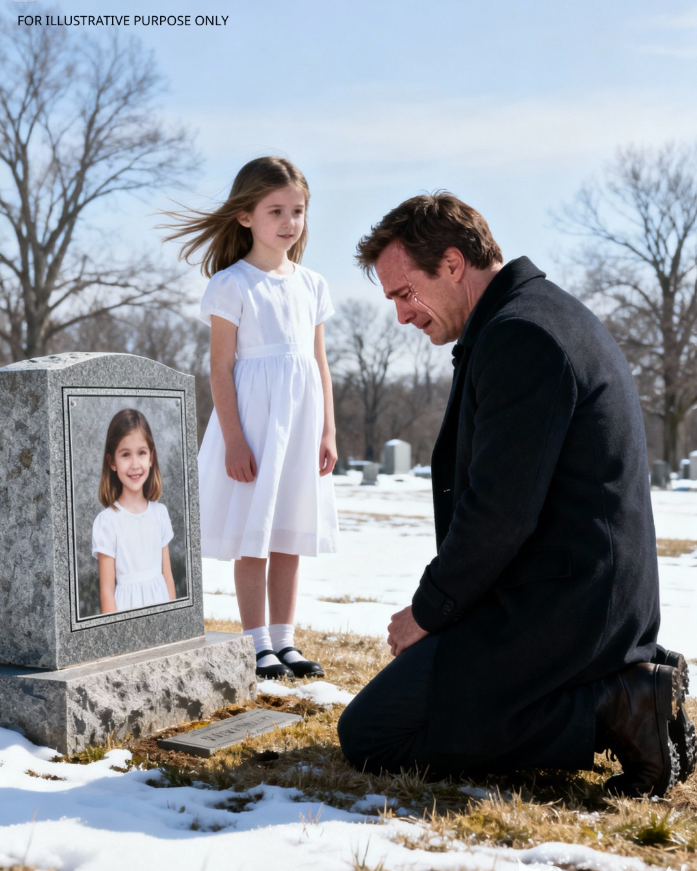
When I returned from the cemetery that evening—after staring at a stone etched with my daughter’s name—I went straight to my study, exactly as I had done every night for three months. I didn’t turn on the ceiling lights. I preferred the room dim, with only the desk lamp and a slice of moonlight from the balcony bright enough to see by.
I still held the silver locket I had intended to leave at her grave but couldn’t bear to part with. Apparently, I’d also been holding a glass of water. The locket remained in my hand. The glass didn’t. It slipped and shattered because my fingers shook so violently I had to collapse into the chair before I dropped anything else.
Everyone in Burlington whispered that I was drowning in grief, that the fire had changed me, that I hadn’t been myself since the night the house—where my daughter Chloe was visiting friends—burned to the ground. By the time the fire trucks arrived, the place was nothing but smoke and skeletal beams.
They told me there were remains.
They assured me she hadn’t escaped.
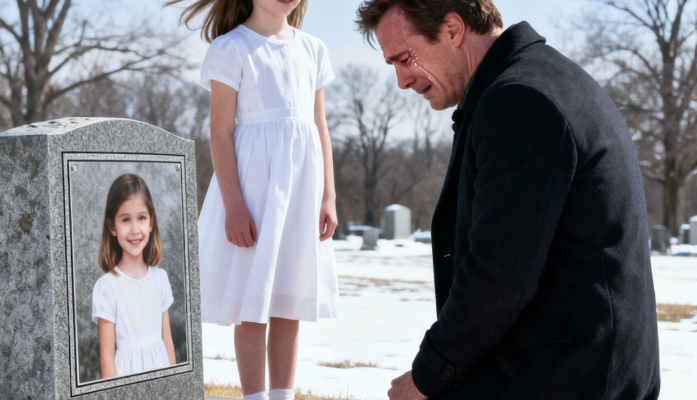
There was a funeral. A sealed casket. A pristine headstone with her full name carved into it.
Everyone repeated the same thing: let her go.
So I tried. I drank the “calming tea” my wife Vanessa brought me every evening.
“For your nerves, Marcus,” she would murmur, brushing my shoulder. “You need rest.”
I also took the pills my brother Colby pressed into my palm each morning.
“Dr. Harris says they’ll help your mind settle,” he told me.
Day by day I moved slower, thought less clearly, forgot entire afternoons. I believed it was grief hollowing me out.
Until the night it wasn’t.
The Girl in the Moonlight
I heard sound before I saw her—quick, trembling clicks, like teeth chattering in cold air.
I lifted my head.
A small figure crouched in the patch of moonlight near the balcony, wrapped in a filthy blanket.
My mind immediately rejected the sight the way it had been trained to for months.
“No,” I whispered to the room.
“You’re not real,” I said, voice fractured. “You… you can’t be.”
The figure shrank back, then a sound slipped from beneath the blanket. A whimper. Then:
“Dad…?”
My heart didn’t just lurch—it stalled, then crashed back into motion so hard I had to grip the desk to stay upright.
Slowly, I approached.
Bare feet, cut and raw. Ankles smeared with mud. Hair tangled. Face streaked with grime and dried tears.
But her eyes—
Those were Chloe’s eyes.
“Chloe?” I exhaled.
She recoiled further against the glass as if expecting punishment.
“Please,” she rasped. “Don’t let them hear me. If they know I came, they’ll find me.”
My pulse hammered.
“Who?” I whispered. “Who are you running from?”
Her gaze flicked toward the hallway.
“Vanessa,” she said. “And Uncle Colby.”
My world froze.
The two people who had carried me, comforted me, engineered the funeral, spoken my eulogy, held my shaking hands…
“They arranged everything,” she whispered. “The fire. The lie. The service. All of it.”
What They Planned
She spoke quickly, as if the truth itself burned her tongue.
She hadn’t been in that house when it burned. Men had taken her days earlier, paid to grab her after school and lock her in a remote property near the lake Colby liked to visit.
She heard them talk—over dinners, drinks, late-night phone calls.
They said I worked too hard.
That I’d never hand over the company.
That they’d have to create my breaking point—and hers.
She escaped only because someone forgot to lock a door. She hid in the woods, watching the smoke rise, watching sirens flood the road, watching her own memorial.
“I saw you at the grave,” she whispered. “I wanted to run to you. But they were there too. After you left, they went back to the lake house. They were laughing.”
Laughing.
She told me the rest:
I hadn’t been losing my grip naturally.
They were dosing me—too much tea, too many pills—just enough to make me dull, slow, confused. Just enough for everyone around me to say, poor Marcus, he can’t survive the loss.
They wanted the company.
They wanted me incompetent, incoherent, and eventually—absent.
So I Played Their Version of Me
I didn’t run.
I acted.
For three days, I let them see me stumble more, fade more, sign more documents I “didn’t understand.”
At night I poured the tea into a hidden bottle.
The pills went into my pocket, not my mouth.
Chloe hid in a fortified room no one but I knew existed.
And I called one man: Frank Monroe, our former security chief.
When he saw Chloe, alive and shaking, he didn’t flinch.
“What do you need, sir?” he said.
From that moment, we weren’t grieving.
We were building.
The Collapse They Expected — and the One We Delivered
One Thursday, in the hallway where they could both witness it, I let my body drop.
They rushed to me.
“His heart,” Colby cried. “No pulse.”
Frank’s private medical team arrived—not to save me, but to extract me.
The town believed I died of grief.
Vanessa wept publicly. Colby began assuming control of the business.
Exactly the performance they had scripted.
Except this time, I was watching from the outside.
Then We Held the Will Reading
They came dressed in black again, prepared to inherit everything.
Richard Davenport, my attorney, pressed play on a recorded message—in which I spoke as if already gone:
“If you’re hearing this, it means my sorrow finished what you helped along.”
Vanessa leapt up, protesting my “confusion,” Colby insisting I was “unwell.”
So I walked into the room.
Gasps. Silence. Chairs scraping.
Before they could form a lie, Frank opened the doors—
and Chloe entered, alive, clean, steady.
Evidence followed:
lab reports of the drugging
recordings of them toasting to “Phase One”
statements from the hired men
The detectives didn’t need speeches.
Handcuffs said enough.
Aftermath
Trials. Headlines. Guilty verdicts.
We didn’t stay to watch our names dragged across every news feed.
Chloe and I moved to the coast—a small cottage, quiet water, no locked doors except the ones we choose.
One evening at the pier, I held two silver lockets—hers and mine—and let them fall into the sea.
We are not healed.
We are not whole.
But we are free.
No longer a grieving father and a ghost-child,
but two survivors who walked out of a story meant to bury both of us.