Laya didn’t notice her textbook slipping into a puddle, its pages curling as blood and muddy water soaked through. All she cared about were the woman’s vitals. By the time paramedics arrived, she had stopped the bleeding, secured the airway, and kept the patient stable enough for transport. An EMT touched her shoulder. “You saved her,” she said. Pride and sorrow rose quietly in Laya’s chest—the bittersweet feeling of doing exactly what you were meant to do, only to be punished for it.
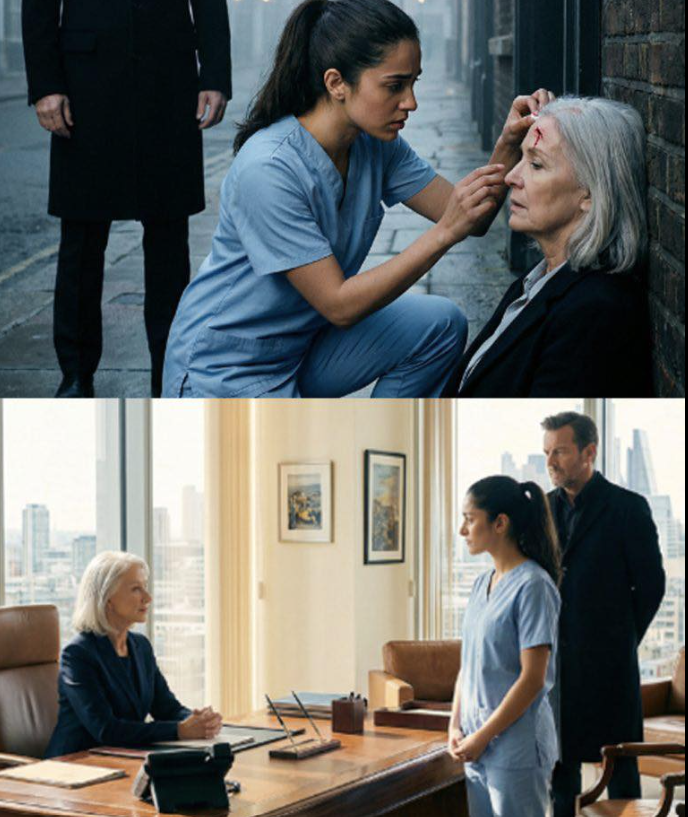
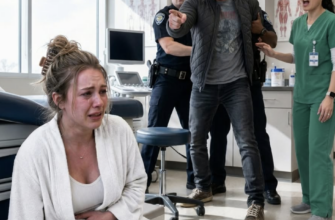
She sprinted to the nursing building, uniform stained, shoes squeaking. On the third floor, the exam room door was already locked.
Dean Linda Vaughn opened it a moment later, wearing her habitual mask of professional coldness. Her silver hair was pulled tight, her smile absent.
“Miss Harris,” she said. “The exam began seven minutes ago.”
“There was an emergency,” Laya said, breathless. “A woman collapsed. I’m a nursing student. I had to help—”
“You were not present,” the dean replied coolly. “The rules allow no exceptions.”
Laya fell silent. Through the window she could see her empty seat—third row, left side—where she had imagined proving she belonged. The sound of a distant laugh stung like a slap.
That afternoon, an email arrived like a sentence handed down: scholarship revoked, academic probation, $26,000 tuition due, mandatory disciplinary hearing. Laya reread it until the words blurred. She sat on her narrow dorm floor, head on her knees, fighting the instinct to cry—she had learned long ago that tears solved nothing and only made others uncomfortable.
Later, a gentle knock. Dorothy Miller, the longtime dorm janitor, peeked in with knowing eyes.
“You all right, honey?”
Laya attempted a smile. “I’m fine.”
Dorothy set her mop aside, entered the bathroom stall with her, and closed the door. “Sit,” she said.
When Laya obeyed, Dorothy looked at her with warm, steady firmness.
“You did the right thing. People upstairs like rules because they’re easy. People aren’t. You chose the harder thing.”
Laya wished she could believe that. But the weight of $26,000 and her grandmother’s thin income felt crushing. The shoestring she’d been holding her life together with had snapped.
At 12:47 a.m., a soft, formal knock came at her door. She opened it on the chain to find a man in a dark coat, neat hair, and tired, kind eyes.
“Laya Harris?”
“Yes.”
“I’m Ethan Ward,” he said, his voice carrying a note of weary gratitude. “My mother, Margaret Ward—you saved her.”
Laya’s breath caught. “Is she—?”
“She’s stable. The doctor says it’s because of you.” He held out his phone, showing CCTV footage of Laya calmly working over his mother. “You knew the risks,” he said quietly, both reproachful and impressed.
“She needed help,” Laya whispered. “I couldn’t walk away.”
His jaw tightened. “My father died waiting forty-three minutes for an ambulance. That’s why I founded WardTech—to stop that from happening to anyone else.”
“You started WardTech?” she asked, startled.
He handed her a business card. “Let me help you fight this.”
“Why?” she asked.
“Because you did what most people wouldn’t,” he said simply. “You saw a person, not an inconvenience.”
He gave her a folder stuffed with statements, emails, and records showing years of unfair treatment. “Tomorrow,” he said, “I’ll be at your hearing. My mother serves on the National Health Fund board—the organization funding your scholarship. They’re not happy with what we found.”
All Laya could manage was a soft, sincere “Thank you.”
Three days later, she faced a long table of administrators. Professor Chen began, “Miss Harris, explain what happened on October 16.”
“I was heading to a final exam when a woman collapsed from a neck wound,” Laya said steadily. “I followed my training. I saved her life.”
“She did,” said a voice at the door.
Ethan walked in with a lawyer, Dorothy Miller, and finally Margaret Ward—pale, in a sling, but determined.
“This hearing is closed,” Dean Vaughn snapped.
But Catherine Ross from the National Health Fund set her briefcase down. “Clause seven grants us the right to attend hearings involving our scholarship recipients—and to audit the program if inequities are suspected.”
She laid out three years of evidence: testimonies of disadvantaged students denied accommodations, biased emails, patterns of selective enforcement. The room shifted.
Margaret Ward spoke. “If Laya is punished for saving me, you’re teaching future nurses that compassion is a liability.”
Dorothy described the hardworking young woman who cleaned rooms at night, knew her grandchildren’s names, and studied until her hands were raw. Her quiet details painted a clearer picture than any dramatic speech could.
Dean Vaughn tried to push back, but the documents and witnesses drowned her out. Eventually she left the room as the committee absorbed the truth.
Professor Chen turned to Laya. “Your exam will be rescheduled. Your scholarship reinstated. And… we apologize.”
But it was only the beginning.
By morning, the story had gone viral. Headlines read: “Nursing Student Penalized for Saving Life—Tech CEO Intervenes.” Social media circulated images of Laya kneeling in blood beside her soaked textbook. A debate flared nationwide.
The university launched an investigation. Dean Vaughn was placed on leave. Professor Chen became interim dean. The scholarship program was restructured, removing vague “cultural fit” criteria. Four students previously forced out were invited back.
WardTech expanded her scholarship to cover tuition, books, housing, and living expenses. She no longer needed to clean dorms to survive. Her grandmother could rest easier. Laya could finally breathe.
Margaret Ward invited her to tea. Laya shared the story she rarely told—the night her own mother died waiting for an ambulance. Margaret listened quietly.
“My husband died that way too,” Margaret said. “It broke me. But it planted something in my son. He built machines so others wouldn’t suffer as we did. And you—on that morning—you gave his work purpose.”
Later, Ethan caught her after a WardTech lecture.
“Coffee?” he asked.
They talked about emergency basics—airways, pulses, the fragile line between life and death. He told her about a program to teach these skills in communities and asked her to help design it.
“Of course,” she said without hesitation.
Together they built a one-day emergency-response course, added equipment to community centers, and created a new scholarship for students like her. WardTech funded it; Laya shaped it with empathy.
On campus, culture shifted. Students who once felt invisible began speaking up. Study groups formed across class divides.
When Laya finally took her rescheduled exam, it felt less like a test and more like a chance. She earned the top score in her cohort. The pride she felt was warm and steady.
A year after the bus-stop rescue, WardTech launched the “Harris Initiative”—full scholarships for low-income nursing students and an emergency-response fellowship. Laya spoke openly about fear, courage, her mother, and the morning that changed her life.
“Whenever you think you’re too small to matter,” she said, “remember the woman who needed a hand—and the person who didn’t look away.”
After the ceremony, Ethan slipped an arm around her. “You changed my world,” he murmured.
“And you taught me people will fight to fix a broken system,” she replied.
No fairy-tale happily-ever-after followed—no castle, no sweeping romance. But life improved in small, meaningful ways. Her grandmother stayed warm through winter. Dorothy’s health improved. The four returning students thrived.
Laya’s greatest reward was quieter: she learned both how to give help and how to receive it. Sometimes she still cleaned dorm floors, not out of need but because the work kept her grounded.
One afternoon under pale spring blossoms, Ethan brushed a strand of hair behind her ear as they walked.
“You know what’s strange?” he said. “The day I almost lost my mother was the day I met the person who reminded me why saving lives matters.”
“The worst days sometimes make space for the best ones,” Laya answered.
They walked together beneath a hopeful sky, the city’s hum in the distance. She had been running toward a final exam—and ended up discovering a courage that reshaped a system.
At a crosswalk, Ethan gently tucked another strand of hair away. “Is it okay if I stay in your life?” he asked.
“More than okay,” she said softly.
And for a girl who once wished to be invisible, being seen no longer frightened her. It felt like becoming whole.