He used to sell his blood so I could stay in school. But when he came to me years later, asking for help, now that I was earning ₱100,000 a month, I refused to give him even a single peso.
When I got accepted into college, all I had was an admission letter and a dream of escaping poverty. Life had been so hard that whenever we managed to have meat on the table, the neighbors would know—it was that rare.
My mother passed away when I was ten. My biological father had disappeared long before that. The man who took me in wasn’t related to me by blood. He was my mother’s old friend, a tricycle driver who lived in a tiny room by the river.
After her death, he decided to raise me despite having almost nothing himself. Through my school years, he worked tirelessly—taking extra trips, borrowing money—just to keep me in class.
I still remember one night when I needed money for an extra course but was too shy to ask. He came home late and handed me a few crumpled bills that smelled faintly of disinfectant. “Your father donated blood today,” he said. “They gave me a small reward. Take it, son.”
I cried quietly that night. Who would give their blood again and again for a child that isn’t their own? He did. No one ever knew—only the two of us.
When I got accepted into a prestigious university in Manila, he hugged me tightly, his eyes wet. “You’re strong, son,” he said. “Study hard. I can’t help forever, but you must get out of this life.”
In college, I worked part-time—tutoring, waiting tables, anything I could find. Still, every month, he sent a few hundred pesos. I told him not to, but he would only smile and say, “It’s my money, and it’s your right to have it.”
After graduation, my first job paid ₱15,000. I sent him ₱5,000 right away, but he sent it back. “Save it,” he said. “You’ll need it more than I do. I’m old—I don’t need much.”
Years passed. I climbed the ladder, became a director, and started earning ₱100,000 a month. I offered to bring him to live with me, but he refused, saying he liked his quiet, simple life. Knowing his pride, I didn’t insist.
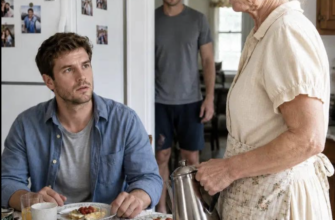
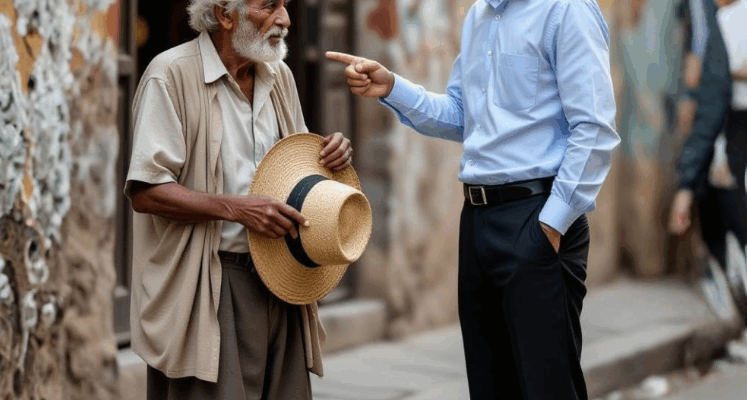
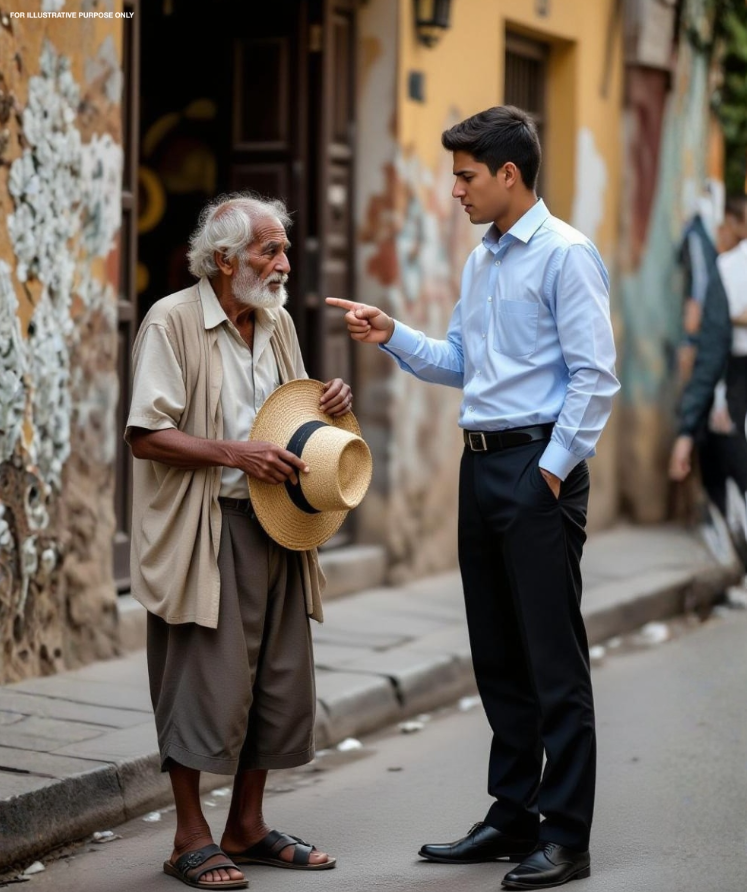
Then one day, he showed up at my door—frail, sunburned, trembling. He sat at the edge of my sofa and whispered, “Son… I’m sick. The doctor says I need surgery—₱60,000. I have no one else to ask.”
I looked at him and remembered everything—the blood he sold, the nights he went hungry, the mornings he walked me to school through the rain. Then I said softly, “I can’t. I won’t give you a single cent.”
He didn’t argue. He just nodded, eyes full of quiet pain, and stood up like a beggar turned away.
But before he could leave, I took his hand, knelt before him, and said, “Dad… you are my real father. How could there ever be debt between us? You gave me everything. Now it’s my turn to take care of you.”
He broke down crying. I held him and cried too.
From that day on, he lived with us. My wife welcomed him as her own father. Though old and frail, he still liked helping around the house, and we often traveled together.
People sometimes ask me, “Why treat your adoptive father so well, when he had so little to give you?”
And I always answer, “He paid for my education with his blood and his youth. He may not be my blood, but he is my father in every way that truly matters.”
Some debts can’t be repaid with money. But gratitude—true gratitude—can always be repaid with love, time, and sincerity.