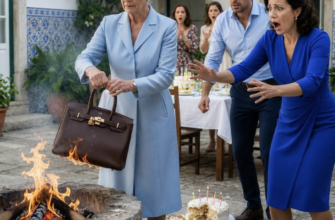
Miguel and I had been married for seven years. From the very first day, I agreed to live under the same roof with my mother-in-law, Doña Carmen—a woman left half-paralyzed by a stroke, dependent on others for every meal, every nap, every step of her routine. I thought it would be simple. She was my husband’s mother; I was her daughter-in-law. Caring for her felt like my duty.
What I never imagined was how long that duty would stretch, or how heavy it would feel when the one person who should have shared the burden—my husband—simply stepped away from it.
Miguel worked by day, and by night, he buried himself in his phone. When I asked why he didn’t help, he’d say, “You take better care of Mom than I ever could. If I tried, she’d only suffer.” I accepted it without bitterness. I believed that was just how life worked: the wife manages the home, the husband earns the living.
Until I learned Miguel had been giving his time, not to work, but to someone else.
One evening, I found a message: “I’ll come over tonight. Being with you is a thousand times better than being at home.” My world shifted—but I didn’t scream, didn’t throw things, didn’t even cry. I only asked quietly, “And what about your mother, the one you’ve left behind all these years?”
Miguel had no answer. The next day, he packed a bag and left. I knew exactly where.
I looked at Doña Carmen—the same woman who had criticized me for years, who once told me I was unworthy of her son. A knot formed in my throat. I wanted to drop everything, to walk away. But dignity, I reminded myself, is the only thing no one can take from you.
A week later, I called Miguel. “Are you home tonight? I’ll bring your mother over. It’s your turn to care for her.”
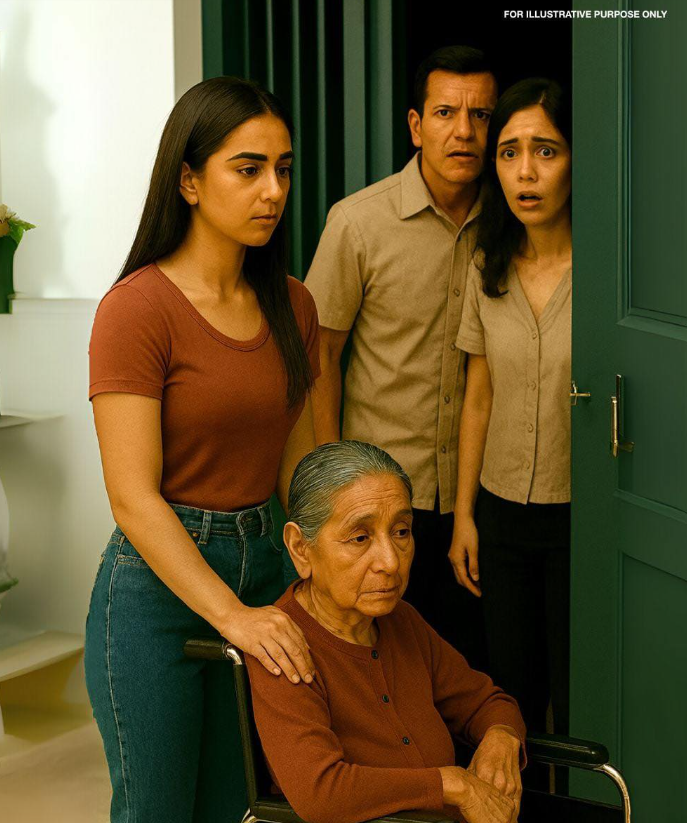
That evening, I packed her medications, hospital records, and medical notes into a worn cloth bag. I wheeled her to the door and whispered, “Mom, I’m taking you to Miguel’s for a few days. Staying here all the time must be boring.” She nodded, her eyes bright like a child’s.
At his apartment, Miguel opened the door. Behind him stood the other woman—silk nightgown, red lipstick, frozen mid-step with a spoon of yogurt in her hand. I wheeled Doña Carmen inside, settled her on the sofa, tucked her blanket, and placed the bag of medicine on the table.
The air was heavy with perfume, but the room itself was cold, silent. Miguel stammered, “What… what are you doing?”
I smiled, calm and steady. “Do you remember? She’s your mother. I’m only the daughter-in-law. I’ve cared for her for seven years. That’s enough.”
The woman’s face drained of color. Miguel’s voice cracked. “Are you abandoning her? That’s cruel!”
I paused, my back to them, and said softly, “You neglected her for seven years. If that isn’t cruelty, what is? I looked after her as my own, not for your sake, but because she is a mother. Now, I’ve done my part. I’m leaving—not out of revenge, but because it’s time.”
I handed him the notebook. “Here are her prescriptions, her medical history, diapers, creams. Everything you need.”
Then I looked at the woman directly. “If you love him, love him completely. This comes with him.”
I set the house deed on the table. “The house is mine alone. I’m leaving it to you both. I only took my clothes. If you ever need money for her care, I’ll still help.”
I bent down and brushed my mother-in-law’s hair gently. “Mom, stay well here. If you feel lonely, I’ll visit.”
Her lips trembled into a smile. “Yes… come when you can.”
I walked out, closing the door behind me. The silence inside was theirs now, not mine.
That night, I slept soundly, dreamless. The next morning, I rose early, took my son to breakfast, and embraced a new beginning—without tears, without anger, without regret.