Mary Smith had always been her parents’ pride. Raised in a modest two-room house on the edge of town, she was their only child and their hope for a better future. Money was scarce, but her parents gave her what they valued most: love, discipline, and education. They believed she would break the family’s cycle of poverty.
For a while it looked like she might. Mary graduated from college with honors—the happiest day of her parents’ lives. But after the caps and applause, reality proved stubborn. Jobs were few and bills were many. After months of searching, she took a job waiting tables at an upscale restaurant in Abuja. It wasn’t her dream, but she worked with grace, kindness, and unflagging hope.
That was when Sam Williams walked in.
Sam was the only son of a wealthy tycoon—polished shoes, gold chain, and the kind of confidence that comes from never hearing “no.” He noticed Mary, smiled, and asked for her number. She hesitated—something about him felt dangerous—but his charm loosened her caution and she wrote her number on the back of a receipt.
He pursued her with texts, lavish gifts, and flattering words. “You’re different,” he told her. “You’re the one.” Mary, full of hope, believed him.
He invited her to his mansion. Marble floors, chandeliers, walls hung with art—it felt like a fairytale. That night they slept together for the first time. Afterward he asked, casually, “So… you were a virgin?” When she nodded, he left money in her purse and left the room. “Do you love me?” she whispered. “You’re special,” he answered, and walked away.
That became the pattern: a visit, intimacy, cash on the dresser, then disappearance. Mary tried to read meaning into it. Then she missed a shift, felt dizzy, and went to a clinic.
“Congratulations,” the nurse said. “You’re pregnant.”
Mary imagined telling Sam—imagined the joy. She called him, handed him the clinic envelope. He read it, then froze.
“You’re pregnant? By whom?” he demanded.
“By you,” Mary said. “You’re the only one I’ve ever been with.”
His face went cold. “You were supposed to use protection. What were you doing with all that money?” He pulled a wad of bills from his pocket, tossed it at her. “Take it. Get rid of it.”
“You want me to—abort the baby?” she asked.
Sam shrugged. “I never said I wanted kids. Or you.”
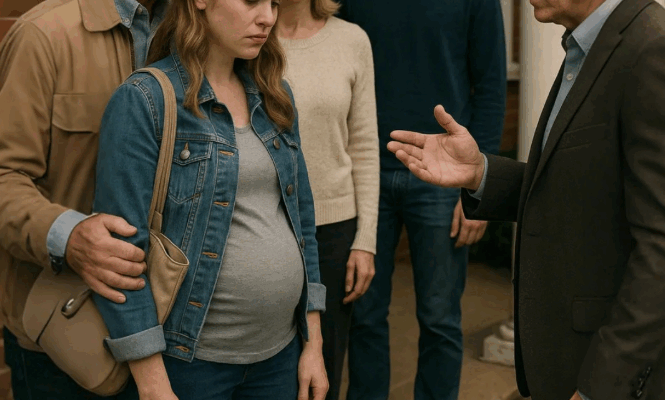
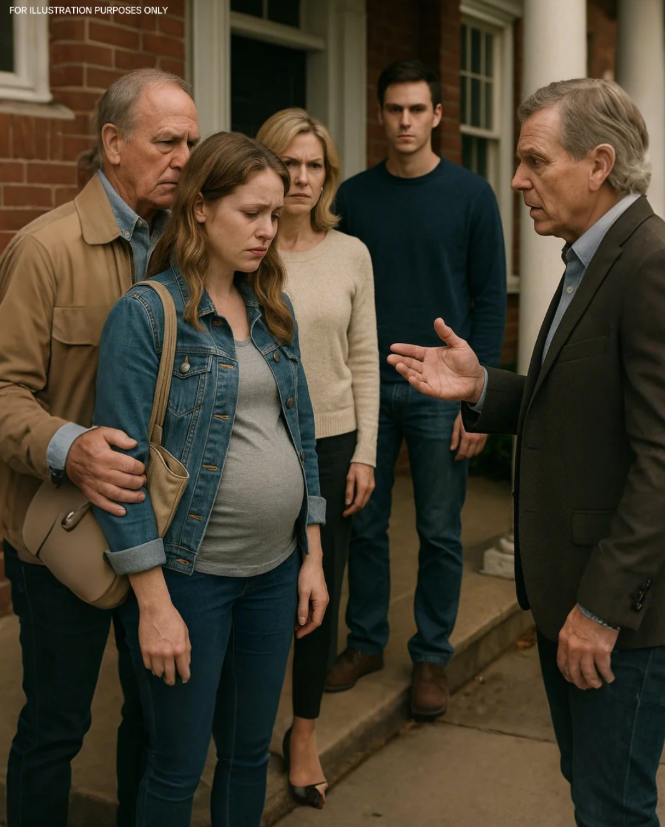
She left that night and went home. Her parents were shocked and hurt, but they didn’t abandon her. Her father, furious and determined, went to the Williams household hoping for an explanation. Sam’s mother dismissed them. Sam pretended not to know Mary. Sam’s father—quiet until then—offered a single, conditional response: “If this child is his, bring the baby here after birth. We’ll do a DNA test.”
Mary decided then to keep the baby—not for Sam’s sake, but for her own. For hope. For every woman who had been treated like a temporary convenience. Pregnancy brought whispers and judgment from strangers, but Mary held her head high. She would raise the child with pride.
Weeks later, a familiar figure sat in her restaurant—Sam’s father. He told her he had been thinking about their meeting and was troubled by how his son and wife had behaved. “You reminded me of someone I once loved, before money changed her,” he said. He promised support each month—not out of pity, he insisted, but because it was the right thing to do.
When Mary’s son was born, he had Sam’s features. The DNA test confirmed it. Sam’s father held the infant gently and named him James. He kept his promise not only with money but with opportunity. When Mary confessed a dream—her own restaurant—he asked for a proposal. She sent one. Three days later he replied: Approved.
With land bought and a building renovated, Mary opened Mary’s Taste of Home. It became more than a restaurant; it was her story on a plate. Customers came curious and left inspired. James toddled between tables and became a beloved fixture. Mary grew into a community figure—resilient, generous, proud.
Then Sam’s father was badly injured in an accident and slipped into a coma. Weeks later he woke, weak but lucid, and said, “Call Mary.” Mary came to the hospital to find Sam and his mother already there. The patriarch surprised everyone: “Apologize,” he told Sam. “Beg for her forgiveness, or you’ll suffer for the rest of your life.” Sam scoffed, but the elder’s last assessment was firm: Mary was not the poor girl he’d once dismissed—she was a successful business owner, stronger than Sam could ever be.
The old man didn’t recover. He died with that truth in the room. At the reading of the will, the family sat stunned. The lawyer announced: Mr. Williams recognized James as his biological grandson and heir to a substantial portion of his estate. To Mary, for her dignity and perseverance, he left control of a fund to support the restaurant and future ventures.
Mary accepted it quietly. “This isn’t revenge,” she said. “It’s justice. For James. For me.” She left with her son and the life she’d built.
Years later Mary’s Taste of Home became a local symbol of second chances. Mary opened a foundation to help young single mothers rebuild. James grew up knowing where he came from and who truly stood by him. Sam faded into a private, bitter life—overshadowed by the woman he’d discarded.
Sometimes second chances don’t just heal. They build empires.