
Felix noticed Mrs. White struggling with her old lawnmower from his kitchen window and went outside without a second thought. A single father in his mid-thirties, he worked nights as a janitor and spent his days raising his daughter, Alice, ever since his wife died in a car crash seven years earlier. Helping his neighbors was just part of the small life he’d built around routine and care.
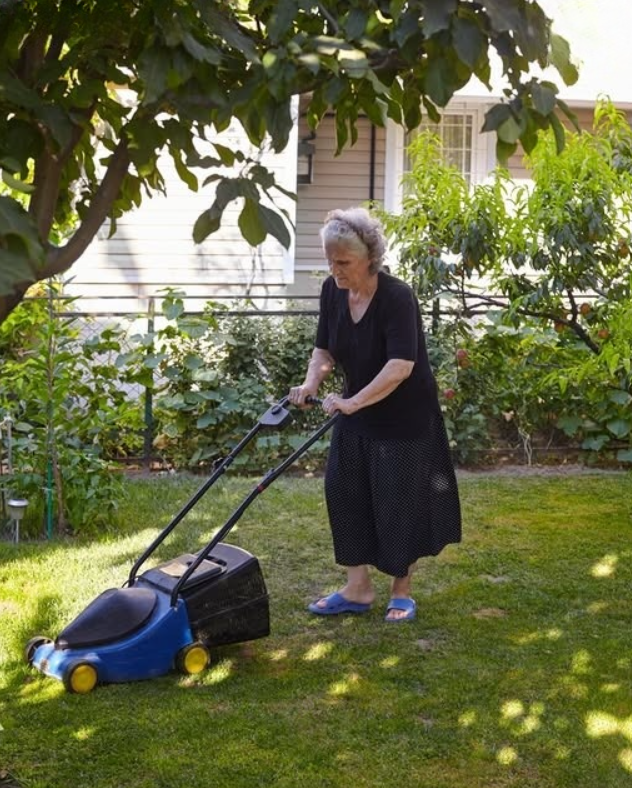
Mrs. White was famously independent, so when Felix took the sputtering mower from her hands and coaxed it back to life, she surprised him by pressing an ornate, antique box into his palms. He refused—uncomfortable accepting such a lavish gift—but she insisted and then, with a grin, tucked a bag of apples toward him for Alice. Felix accepted the apples and, with a polite “thank you,” went home.
Alice barreled into the kitchen, delighted with the apples—and then gasped when she found the little box hidden among them. Felix frowned. “We can’t keep it,” he told her. “It doesn’t belong to us.” Alice begged to look inside; Felix, firm but gentle, said no. They agreed he would return it.
When he knocked on Mrs. White’s door later, the house answered with silence. He found her on the couch, peaceful and still—she had died quietly, alone. Shock hollowed him out. He called for help, but in the confusion he left the box on his table, heavy and inexplicable.
Curiosity and practical worry got the better of him that night. Felix searched online and found similar boxes—antique, inlaid with gold and tiny diamonds—selling for hundreds of thousands of dollars. The idea of what that money could do for Alice nagged at him like a persistent ache. Before he could decide what to do, the phone rang.
“Is this Felix? Jonathan Pryce—Mrs. White’s attorney,” the caller said. They arranged to meet the next morning at Café Lorraine. Felix arrived to find not only the lawyer but a man who introduced himself as Henry—Mrs. White’s son. Henry’s questions were sharp and immediate. He accused Felix of being at his mother’s house and asked about a missing family heirloom.
Felix explained he’d helped with the mower and that Mrs. White had given him the box. Henry, incredulous and angry, offered a deal: return it and he would pay a thousand dollars. Felix, now aware of its far larger value, bristled. “I won’t be spoken to like that,” he said. “If it’s that important, bid at the auction like anyone else.”
The next day the box drew attention at the auction. Experts probed its provenance; Felix, nervous and confused, mumbled something about inheritance. They demanded proof of ownership. Rumors of police involvement began to circulate. Panic, more than pride, pushed him out of the room—Felix fled.
Fear turned his thoughts selfish and reckless. That night he went back to Mrs. White’s house to look for paperwork that might explain how she intended the box to be passed on. He found nothing. When Henry appeared in the doorway—having followed him—Felix realized he’d made a grave mistake. Henry could have called the police for breaking and entering; instead, he used the leverage.
“You have until tomorrow,” Henry said. “Bring me the box, or I report you.”
Felix left empty-handed, cornered between losing any chance at the box’s value and risking arrest. He chose what he thought would protect Alice: he packed her off to her grandmother in Virginia, stuffed the box into her bag for safekeeping, and watched the bus take her away. Then, in a moment of white surrender, he called Henry and told him he had no box and that the police could come for him. When they did, Felix went quietly.
Prison reduced life to a clock and small, repeating tasks. Months passed like that until, one afternoon, a guard came with sudden orders: “Pack your things.” Confused and wary, Felix followed—only to see Alice waiting in the visiting room, older and more determined than he’d left her.
She’d kept her promise. While staying with her grandmother she’d studied the box until she’d figured out its latch and opened it. Inside were papers: a will, a letter from Mrs. White explaining that she wanted Felix to have the box and its contents, and documentation of family provenance. Alice had taken those papers to a buyer—an antiques collector—who paid not just for the box but connected her with a lawyer and helped arrange bail. They’d used the proceeds to mount Felix’s defense.
Seeing Alice arrive—small, fierce, and triumphant—Felix felt relief and shame and gratitude all at once. Together they walked out of the visiting room and into a life that looked very different than the one Felix had imagined the week before, but better in the ways that mattered. They had money enough to breathe, and, more important, they had each other.
Alice squeezed his hand. “We’ll start over, Dad,” she said. “One step at a time.” Felix let himself believe her.