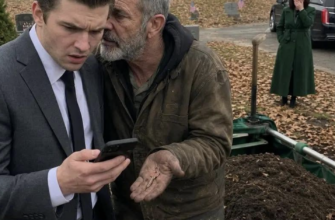
Sometimes life takes a turn so strange you find yourself somewhere you never imagined. That was the fate of Don Alexey — a simple man with kind eyes and a body bent by years of work — who spent his life dreaming only that his children would be happy.
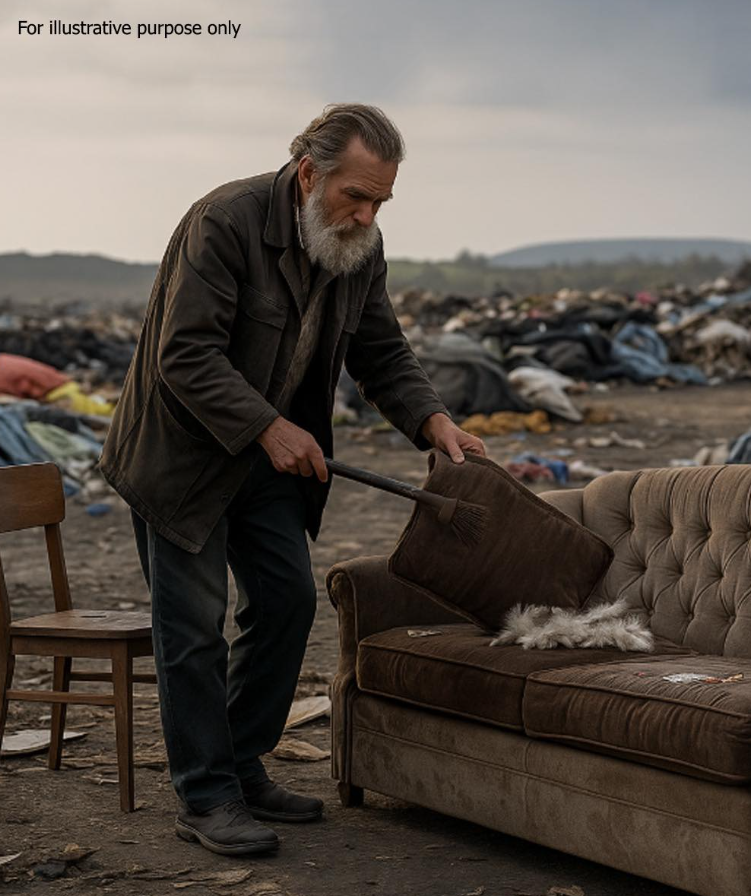
He never imagined that, after giving them everything, he would end up alone, searching through the refuse of others for the few things that still mattered.
Don Alexey’s story could belong to any father who works long hours to support his family, bears fatigue and aches without complaint, and always puts his children first. His wife Katya had died years earlier, but her memory lived on in him as he watched his sons, Arseniy and Vitalik, grow into men and make lives of their own.
One ordinary evening, as dusk gilded the windows, Vitalik burst into the house. “Dad, we brought you a present!” he shouted, all the wide-eyed certainty of a child who thinks he’s done something noble. Arseniy trailed behind, smiling awkwardly.
Don Alexey smiled back. “You needn’t spend money on me,” he said, though a small swell of pride warmed him. They handed him an envelope.
Inside was a ticket to a sanatorium for musculoskeletal treatment.
“A friend sold it cheap,” Vitalik explained. “My boss hurt his back and can’t use it. I thought it’d help you.”
For a moment Don Alexey felt his chest tighten. He told himself he had done the right thing raising generous sons — just as Katya would have wanted. He embraced them, proud and nostalgic, wishing Katya were there to see it.
But their “gift” had been planned. For months they had pressed him to sell his three-bedroom apartment in the city center. Their plan was practical: split the proceeds, buy a small place for Alexey in the suburbs, and each son would have his share.
“I don’t need a villa,” Alexey had said. “A roof and a bed are enough.” The youngest was getting married; the eldest was about to be a father. It seemed like the right moment.
A week later they kissed him goodbye at the station. He left for the sanatorium for a week of rest and treatment, trusting his sons completely. He signed a power of attorney for them before he left — an act he believed was simply practical.
When Alexey returned two weeks later, the sons met him at the station. “Is the deal done?” he asked.
“Yes — the apartment sold,” Arseniy answered, a smile that did not reach his eyes. “Vitalik even bought a house.”
“That’s great,” Alexey said. “Will you help me find a new place?”
“We found an option for you,” Arseniy said as they climbed into the car.
“I want to choose it myself,” Don Alexey protested. “I’m the one who’ll live there.”
“It’s fine, Dad — you’ll like it,” Vitalik soothed.
They drove to a dilapidated summerhouse in a cooperative: three crumbling walls, a half-roof, abandoned for years. Alexey stood, stunned.
“This is my home now,” Vitalik said, looking away.
“But this is ruins… I can’t live here,” Alexey cried. The truth hit him then: they had sold his apartment, divided the money, and left him in a place with no running water, no electricity, no furniture. A cold clenched his heart like never before.
In the following days he tried to make do. He scavenged the wrecked house for anything useful — a chair, a pot — and slept on a ragged blanket. Hunger and shame were constant companions. He wandered the neighborhood hopeful for a friendly face, but the area was mostly empty.
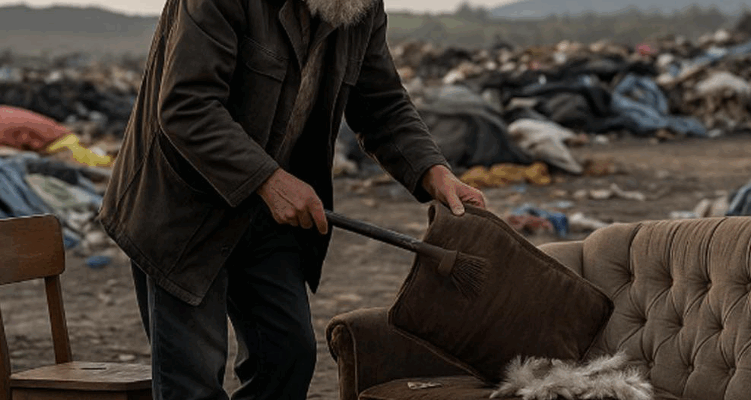
One morning he walked to the municipal dump a few blocks away, thinking he might find something practical. There, among torn sacks and boxes, he discovered objects that once meant everything to him: the watch Katya had given him on their wedding day, a framed family portrait, his old doctor’s coat, beloved books. Everything he had cherished lay discarded like trash.
Tears came, not for the objects themselves, but for the life they represented — a lifetime reduced to refuse. He felt anger, sorrow, and an aching loneliness: how could his own children do this? When had love become convenience?
Word of the “old man at the dump” spread. Neighbors and former neighbors began to bring food, clothes, and small comforts. A shopkeeper gave a pot; another neighbor lent a lamp. Slowly, Don Alexey set his small shelter in order, but the sting of betrayal lingered.
A local journalist eventually came by to ask why he hadn’t sought legal action or tried to find his sons. Alexey only sighed. “They are my children,” he said. “I raised them. If they chose this, maybe I failed them somehow. I won’t make trouble.”
The story touched the community. People rallied with offers of help and even a place to live. Alexey, proud and stubborn, preferred to stay in the makeshift house.
“I have my memories here,” he said. “And here I learned that family isn’t always blood — sometimes it’s the people who stand by you.”
Now he lives in that patched summerhouse, but he is no longer alone. Neighbors stop by with bread and tea; they celebrate his birthday. He survives on little, but he has found something richer than what he lost: dignity rebuilt by the kindness of others.
At dusk he often sits on the porch and thinks of Katya. “Wherever you are,” he murmurs, “you’ll know I did my best.”
Life can be cruel, but it can also hand you a second chance. Don Alexey, who lost everything because he loved too freely, found in the ruin a different kind of family — and with it, a renewed sense of worth.