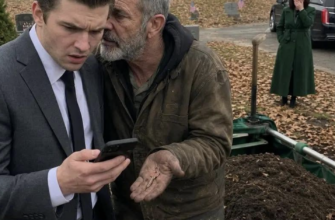
The newly widowed husband sat at the altar, dazed, his eyes raw from crying. His wife had died suddenly of a heart attack. Through the pain and chaos of the funeral he kept going — greeting visitors, arranging flowers, preparing for burial — barely able to fight off exhaustion.

That morning he realized his phone was missing. He searched the house, asked relatives; no one knew where it was. He told himself he must have left it somewhere and tried to focus on the ceremony. The coffin was sealed and taken to the cemetery. Heartbroken, he forced himself to be strong for his daughter.
Late that night, when only he and the girl were in the cold, quiet house, his phone — from his own number — buzzed.
“Love, I’m still here. Don’t let them fool you.”
He froze, cold sweat prickling his skin. Then he remembered: when he had bent down to see his wife for the last time, he might have dropped the phone into the coffin before it was closed.
But who could be sending a message from his wife? She was dead — the doctor had confirmed it and the death certificate had been signed.
Trembling, he typed, “Is it really you?”
The reply was immediate: “Believe me. I didn’t die of a heart attack. I was poisoned.”
The ground seemed to fall away beneath him. His wife had been kind and gentle — who would do this?
“Who did it?” he asked with shaking hands.
A short, chilling reply: “A relative… someone in the same house.”
He glanced around the empty living room, at the small altar and the flickering candle. His daughter slept in the bedroom. Who could have had that hatred — a brother-in-law, a cousin hungry for an inheritance?
Another message arrived: “Open the wooden drawer… you’ll understand.”
He ran to the cabinet where he kept important papers and yanked the drawer open. Beneath a stack of documents lay a bottle with the label torn off and a few white pills inside.
He remembered the night before: his wife’s cousin had brought her a glass of warm milk. She drank it — and less than an hour later the crisis began.
He collapsed to the floor, sweating and shaking. One last message glowed on the screen: “Take care of our daughter. Don’t let her be next.”
Kneeling, clutching the phone, he let the tears come. Outside, wind whistled through the window cracks and the candle flame trembled, as if something unseen were watching over them. Deep inside him he felt certain his wife was guiding him from beyond.
At dawn he took the jar and the messages to the police. The investigation exposed the truth: his wife’s cousin had poisoned her, driven by greed for the inheritance.
On the day of the trial he stood with his daughter at the courthouse steps. The sky was bright and blue, white clouds drifting calmly, as if someone were smiling down.
Softly he whispered to the wind, “I will raise our daughter. I will walk the rest of the way for you.”
And in his heart he heard her answer, clear and loving: “I am still here, forever.”