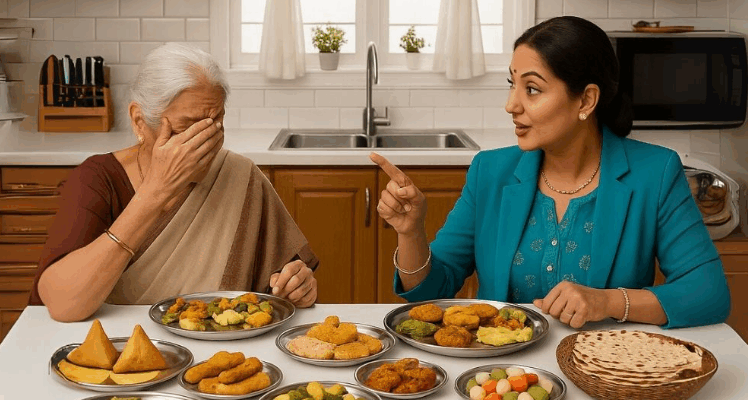
My name is Asha. I’m 32, a primary school teacher in Ghaziabad, and this is the story of one afternoon that shattered years of silence — and, unexpectedly, set me free.
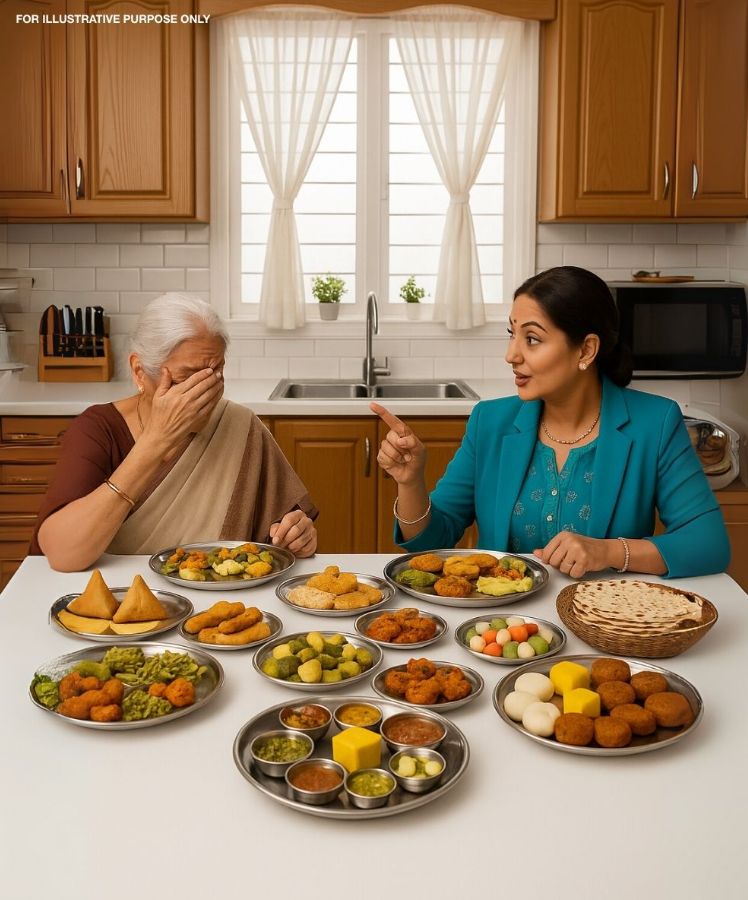
Ten years of teaching by day and tutoring by night finally let me buy a modest three-bedroom house. My mother, Savitri, co-signed the loan so I could finish the payments. The house was small, but it was my pride — a roof paid for with her sacrifices and my persistence.
When I married Vikram, I asked his widowed mother, Nirmala, to move in with us. She and Vikram had been living in a tiny rented room, and I didn’t think it right to leave her alone. My mother worried: “This is your house. Don’t lose yourself.” I told myself treating my mother-in-law well would keep peace.
I was naïve.
From the day she moved in, Nirmala behaved like she owned the place. She rearranged furniture, moved the puja mandir, changed curtains, and whenever I objected she dismissed me: “You’re the daughter-in-law. Respect your elders.”
Vikram never defended me. “She’s old, ignore her,” he’d say. So I swallowed the jabs, the condescension, the small humiliations, telling myself patience would preserve family harmony.
One Saturday my mother called. “Asha, I’ve brought vegetables from the canal farm and some fresh fish. I’ll come tomorrow to see you and Kabir.”
I was thrilled. I longed for her cooking and the sound of her laughter with my little son. I texted Vikram: “Mom’s visiting tomorrow.” He replied, “Okay.”
The next afternoon I hurried home with my arms full of fruit. The smell of fried fish met me at the door. In the living room, my mother-in-law sat in a silk sari and lipstick beside a guest — Mrs. Malhotra, the president of the local women entrepreneurs’ association.
I greeted them politely. But then I found my mother in the kitchen, sleeves rolled, sweat on her brow, washing a mountain of dishes.
“Mom! Why are you doing this? Where’s the maid?” I demanded.
She smiled weakly. “I came early. They said there were guests, so I should eat in the kitchen with the maid. I thought I’d help.”
My throat tightened. This woman — who had mortgaged herself to help me buy this house — was being treated like a servant.
I wiped her hands. “Sit down, Mom. Leave this to me.”
I walked into the living room, heart pounding. The chandelier glittered; cups clinked; laughter floated — and all I felt was anger.
I looked straight at Mrs. Malhotra. “Auntie, you are our guest, but I must speak. My mother brought vegetables for her grandson. She was told to eat in the kitchen. Do you know why? Because someone decided she wasn’t decent enough to sit here.”
The room froze. Mrs. Malhotra frowned at Nirmala. “Is this true?”
Nirmala scoffed. “Nonsense. She arrived suddenly; I only asked her to rest. Asha is exaggerating.”
I laughed, hard and cold. “Rest? In front of a sink full of dishes? You’ve insulted her for years, but today you crossed the line. This house is in my name, bought with my hard work and my mother’s loan. If you think you own it, wake up.”
Color left Nirmala’s face. “How dare you? You live here because this family accepted you. Without us, who would you be?”
I stepped closer. “Wrong. I didn’t need to be adopted. I built this life myself. And today I will not allow you to treat my mother like a servant.”
I opened the door. “Leave. Both of you.”
Mrs. Malhotra rose, embarrassed. “Perhaps… I should go.” She hurried away, murmuring apologies.
Nirmala glared, trembling with fury. “You’ll regret this.” Then she left, her proud back bowed.
I felt no triumph — only the strange calm of finally standing up.
Vikram came home shortly after, sweaty from work. He looked from me to his mother outside. “What did you do? You threw them out?”
I steadied my voice. “Your mother told mine to wash dishes and eat with the maid. Is that acceptable to you?”
He raised his voice. “She’s my mother. You had no right.”
“And what is my mother to you?” I shot back. “She sacrificed everything for me. If someone did this to your mother, would you be silent?”
He faltered, said nothing. Riya, his younger sister, stormed in. “What drama is this? Guests humiliated, our family name ruined!”
“Your mother insulted mine,” I said calmly.
Riya sneered. “Money has made you arrogant.”
“If your mother had been forced into a kitchen like mine, would you laugh?” I asked. For once she had no reply.
That night Nirmala called relatives, crying about her “cruel” daughter-in-law. I sat beside my mother in the kitchen while she quietly sorted vegetables, her shoulders shaking.
“Mom, let’s go back to the village tomorrow. I can’t let you suffer here another day.”
Her eyes filled. “Forever?”
I nodded. “Yes. It’s time.”
At dawn we packed a few bags. With Kabir in my arms I left the house, the marriage and the silence that had built around us.
I returned to the city briefly to finish one thing: I went to the bank and cleared the last of the loan with money I’d saved from years of extra tuition classes. Then I transferred the property into my mother’s name. She had given everything for me; now the house was truly hers.
Back in the village I packed Vikram’s and Nirmala’s belongings into suitcases, left them in the courtyard, and changed the locks. I sent Vikram a final message: “If you have any self-respect, take your things. Your mother is gone, and so am I.”
I didn’t wait for a reply. Silence had been his answer all along.
Months later I heard about their downfall. Nirmala, once the gracious hostess at kitty parties, wandered the market in plain cotton, avoided by neighbors who whispered, “Her daughter-in-law threw her out.” Her circle of friends stopped inviting her. Mrs. Malhotra no longer took her calls.
Vikram lost ground at work. Colleagues said the “family scandal” made clients wary; promotions slipped by. The silence he had chosen that afternoon began to cost him everything.
I felt no glee — only the heavy recognition that delayed justice can cut deep.
At my mother’s house, life lightened. Kabir sang and clapped in the courtyard. We planted spinach, watered flowers, and cooked together. At night we warmed our hands by the stove and listened to the radio.
One evening I asked gently, “Mom, are you still sad?”
She smiled, eyes steady. “Sad? Not at all. I get to be with you, to cook for you, to watch Kabir grow. That is enough.”
Her words healed me more than time.
I tell this story not to revel in anyone’s fall, but as a reminder: no mother deserves humiliation. They don’t need pity—only respect.
If you’ve ever watched your mother shrink in someone else’s house, know this: you are not alone. You can stand up, walk away, and begin again with your dignity intact. I once thought patience was strength. Now I know true strength is refusing to let silence bury love.