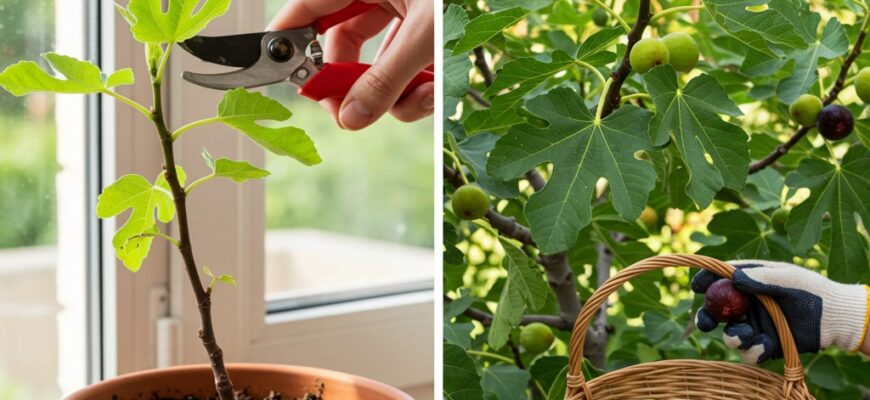
How to Grow Figs in Containers: A Simple Step-by-Step Guide**
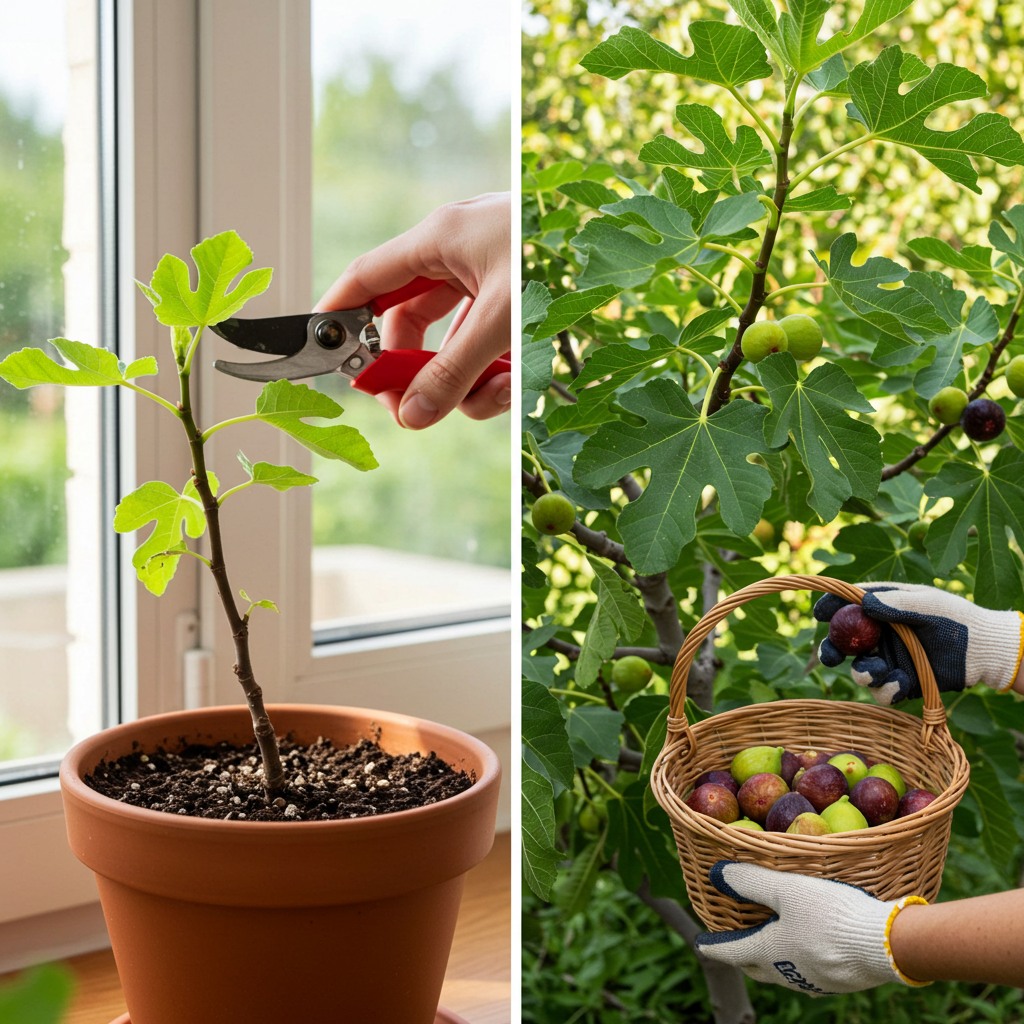
Growing fruit in containers is a great option for anyone with limited space—and fig trees are one of the best choices. With just a 20-liter pot, you can enjoy a beautiful, productive fig tree right on your patio or balcony. Here’s how to grow one successfully, from choosing the right pot to harvesting delicious fruit.
1. Choose the Right Container
Start with a container that’s about 18 to 20 liters in size—this gives the roots enough space to grow. Make sure it has drainage holes at the bottom to prevent water from building up and causing root rot.
Before adding soil, place a layer of paper towel or mesh at the bottom to keep soil from washing out. Fig trees prefer slightly acidic soil, so if the pH is too high, mix in some organic matter like compost to lower it.
2. Plant Your Fig Tree
Remove the seedling from its current pot, being careful not to damage the roots. If the root ball is tight, gently loosen it or make small cuts on the sides to encourage new growth.
Set the seedling in the center of the container and fill in around it with soil, pressing down firmly to remove air pockets—but don’t pack it too tightly. Good soil contact is key for healthy roots.
### 3. Add Organic Matter
After planting, cover the top of the soil with a layer of organic compost or well-rotted manure. This helps improve soil structure, adds nutrients over time, and naturally lowers pH—perfect for fig trees.
### 4. Watering and Mulching
Water the tree thoroughly after planting to help settle the soil and hydrate the roots. Add a layer of mulch, like clay pellets or small stones, to keep the soil moist and reduce evaporation.
Water regularly—especially in hot weather—but allow the top layer of soil to dry out between waterings. Fig trees don’t like sitting in soggy soil.
### 5. Protect Against Pests with Bordeaux Mixture
Figs can suffer from fungal diseases like mildew or rust. To protect your tree, use **Bordeaux mixture**, a copper-based fungicide commonly used in gardening.
Spray it on the tree every 30 days, covering the leaves (including underneath) and branches. It forms a protective barrier against fungal spores, helping your tree stay healthy and productive.
### 6. Ensure Sunlight and Proper Care
Figs love the sun—place your container where the tree will get at least **six hours of direct sunlight daily**. As the tree grows, make sure it has enough space for its roots and branches.
Prune regularly to keep the tree healthy and encourage more fruit. A well-pruned fig tree produces better-quality figs and stays easier to manage in a container.
7. Harvesting Figs
With the right care, your fig tree can start producing fruit within **one to two years**, depending on the variety. Figs are ready to pick when they’re soft to the touch and have a deep color.
Harvest gently by hand to avoid damaging the tree. Enjoy them fresh or in your favorite recipes!
Final Thoughts
Container gardening makes it easy to enjoy fresh figs at home. With a bit of care—choosing the right pot, using the proper soil, watering wisely, and protecting the tree—you’ll have a thriving fig tree that rewards you with delicious fruit. Even without a big garden, you can grow something truly satisfying.