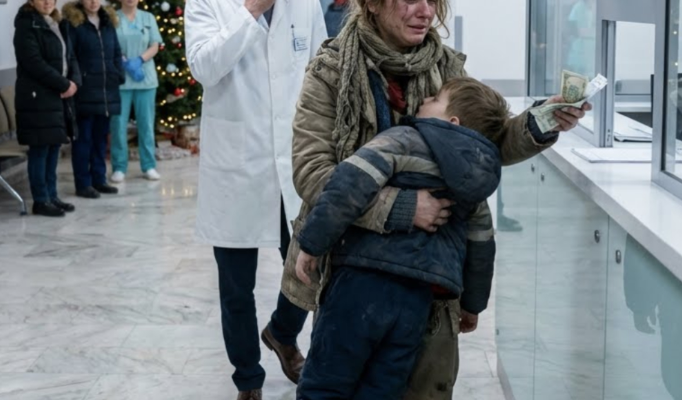
On a rain-soaked Christmas Eve, two lives collided in the gleaming corridors of São Cardoso Hospital, setting in motion a transformation that would shatter decades of carefully constructed lies and reveal the true meaning of dignity.
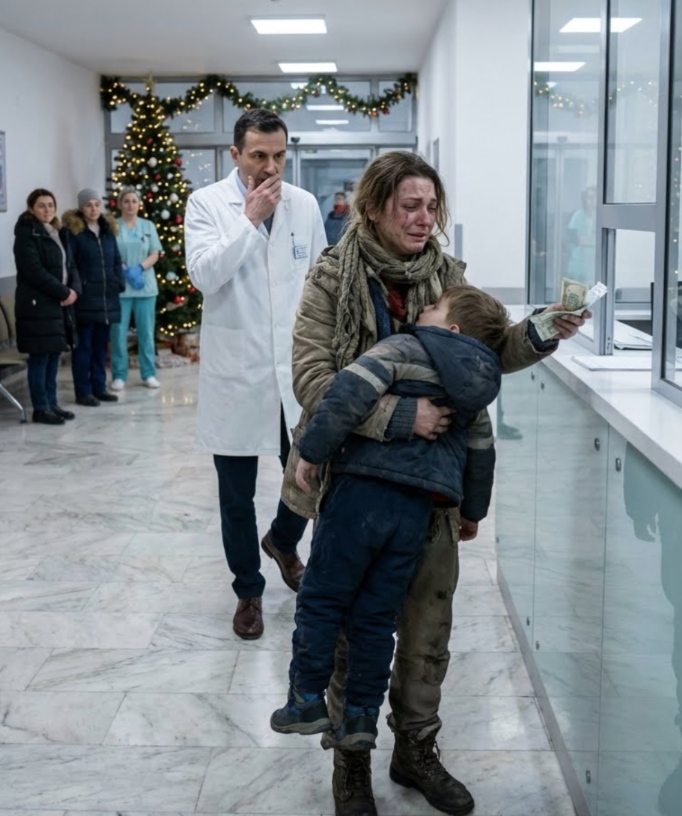
The Man Behind the Mask
Dr. Ricardo Cardoso appeared to be success personified: a celebrated surgeon with a Swiss watch on his wrist, expensive suits beneath his pristine white coat, and the quiet authority of someone accustomed to obedience. He moved through the hospital’s Italian marble halls with the confidence of a man who belonged among the elite. But this polished exterior concealed a profound fracture—a lie he had been living for twenty-five years.
Ricardo hadn’t been born into privilege. His father, João, swept streets in an orange uniform with calloused hands. His mother, Maria, washed other people’s clothes until her fingers swelled from soap and water. They taught him that «there’s no such thing as dishonest work, only honest men who work.» But at fourteen, Ricardo witnessed the cruel reality of class prejudice when an elegant woman threw garbage at his father’s feet with disgust, and João silently picked it up. That night, hearing his mother weep and his father whisper, «One day our boy will be so great that no one will be able to trample on him,» something hardened in young Ricardo’s heart.
Three months later, a drunk driver—the son of a wealthy man—ran over João and killed him. Money bought lawyers, silence, and oblivion. The world moved on as if nothing had happened, and Ricardo’s mother died before seeing her son graduate from medical school. Orphaned and bitter, Ricardo made a devastating choice: he would erase his past entirely. He invented a «presentable» middle-class background, moved to a different neighborhood, and cut all ties to his origins. What began as self-defense became a habit, and the habit became a prison.
Even as he gained wealth, prestige, and high-society patients, Ricardo lived with a gnawing emptiness. His one secret act of redemption was funding full scholarships through an anonymous foundation for impoverished students dreaming of medical school—a silent conversation with his dead father. But penance alone wasn’t enough to heal what he had broken inside himself.
The Woman of True Dignity
Marina Santos Silva woke at 4:30 every morning to an eighteen-hour workday. At twenty-eight, she was a single mother to six-year-old Gabriel, cleaning private offices and then crossing the city to work at São Cardoso Hospital. There, she was invisible—just another uniform, a mop, a body bent over marble floors. But Marina possessed something no amount of poverty could strip away: her dignity. When a doctor once offered her «help» in exchange for private meetings, she looked him in the eye and said, «I’m poor, doctor, but I’m not cheap.» That phrase cost her hunger and extra shifts, but it saved her soul.
Three months before Christmas, Gabriel began experiencing severe leg pains. The health center gave him anti-inflammatories and excuses. By December 23, his fever reached 40 degrees Celsius and he convulsed. Marina, with no money for a taxi, wrapped him in a blanket and went out into the rain, desperately flagging down cars. A compassionate bus driver let her on without payment: «Let’s go to the hospital.»
The Moment Everything Changed
When Marina burst through São Cardoso’s Christmas-decorated doors with her dying son, the receptionist demanded insurance cards and procedures. Marina trembled: «I have a hundred reales… I work here… please.» When indifference began closing doors, Marina did the only thing left—she knelt on the cold marble floor with her pale son in her arms and begged through tears, while people watched, murmured, and recorded on their phones.
Then a male voice cut through the air: «Get up.»
Dr. Ricardo Cardoso stood before her, not with pity but with a strange fury, as if someone had touched a wound that never healed. «The floor is no place for any mother,» he said, extending his hand. He took Gabriel with medical precision and filial urgency, immediately recognizing the gravity of the situation. «I want the operating room ready in fifteen minutes. Full team. Now.» When the receptionist tried to discuss authorizations, Ricardo froze her with a look: «When I need your opinion on my patients, I’ll ask you.»
The surgery was brutal and long, but Ricardo saved Gabriel’s life and his legs. When Marina asked what she owed, Ricardo knew the amount was impossible for her. Instead, he offered her a job in his private practice with better pay. Marina, ever proud, accepted with one condition: «I work for real. I don’t want handouts in disguise.» Ricardo felt a blow to his chest—it was his mother’s voice, the same dignity.
The Awakening
Over time, Marina transformed Ricardo’s sterile office with small touches: flowers, real coffee, genuine smiles that made patients feel human. Ricardo, who had lived surrounded by cold perfection, began to breathe differently. When he tasted Marina’s homemade stew, he nearly cried—it wasn’t just food, it was memory. When Gabriel, still on crutches, said he wanted to become a doctor «to help poor children,» Ricardo saw himself as a child with undiminished dreams. He began to feel something money couldn’t buy: belonging.
But Dr. Camila Vasconcelos, an elegant colleague obsessed with Ricardo, grew poisoned with jealousy seeing him respect Marina. She spread vicious rumors—that Marina was manipulating him through her sick son, that «mixing classes» was dangerous. The hospital board summoned Ricardo to discuss «institutional image.» He defended Marina with sharp composure and denounced their hypocrisy, but the gossip had taken root.
The Breaking Point
When Marina discovered the rumors, she resigned to protect Ricardo. Reading her letter, something broke in him completely. He drove to her community, and when his black Mercedes appeared on the uneven street, his past greeted him with the scent of damp earth. Marina tried to hide him: «You can’t be here.» Ricardo replied, «I’ve spent too much time living so others won’t talk.»
Inside her small, clean house, Marina said what hurt most: «I’m just a cleaner. People like me don’t mix with people like you.» Ricardo’s eyes filled with tears: «People like you? You are dignity. You are love. You are the best thing I’ve ever seen.» Then, for the first time in twenty-five years, he confessed everything—his father the street sweeper, his mother who washed clothes, his shame, his lies, his escape. «I’m a walking lie,» he sobbed like a child. «And you… you’re saving me.»
The Public Reckoning
Camila, enraged, hired a private investigator and when she found nothing wrong with Marina, she fabricated evidence and forged messages. She even went to Marina’s house to humiliate her: «Do you really think a rich man would stay with a cleaning lady?» Marina stood firm: «I have dignity, Doctor. You’ll never have that.»
Ricardo knew private defense wasn’t enough. At the hospital’s Christmas charity gala, as Camila introduced him with his fabricated backstory, Ricardo took the microphone: «That’s a lie.» Before three hundred people in tuxedos and expensive dresses, he confessed everything—his father’s orange uniform, the humble neighborhood, the unpunished injustice. Then he pointed to Marina in her simple borrowed dress: «She reminded me who I was. She has more real value than most of this room… including me.»
He walked through the parting crowd, knelt before Marina—reversing their first encounter—and said, «Forgive me for taking so long to be worthy. I fell in love with the most honest woman I have ever known.»
The New Beginning
That night didn’t fix the world, but it broke a chain. Camila fell because of her own wickedness. The hospital had to face its exposed hypocrisy. Ricardo’s anonymous foundation became public, named after João and Maria Cardoso. He began volunteering at public hospitals—not as a hero, but to finally be on the right side of his own life.
Years later, Ricardo and Marina married in the community where he was born. Gabriel walked without crutches, hugged Ricardo, and called him «Dad» with healing naturalness. Gabriel eventually entered medical school, fulfilling a dream about purpose, not wealth. One quiet morning, the family—including baby Maria Joana—visited the cemetery and placed flowers on a simple grave. Ricardo whispered, «Mom, Dad… I did it. This time without shame. Without lies. With dignity.»
The Lesson
The story teaches that the greatest wealth doesn’t reside in a safe, but in the hands of those who refuse to lose their honor even when surrender would be easier. You’re not defined by where you come from, but by the courage to honor it. Sometimes, returning home isn’t going backward—it’s finally finding yourself.