After three long deployments overseas, I imagined walking straight into my family’s arms. Instead, the moment I landed at Memphis International, a text from my husband lit up my phone:
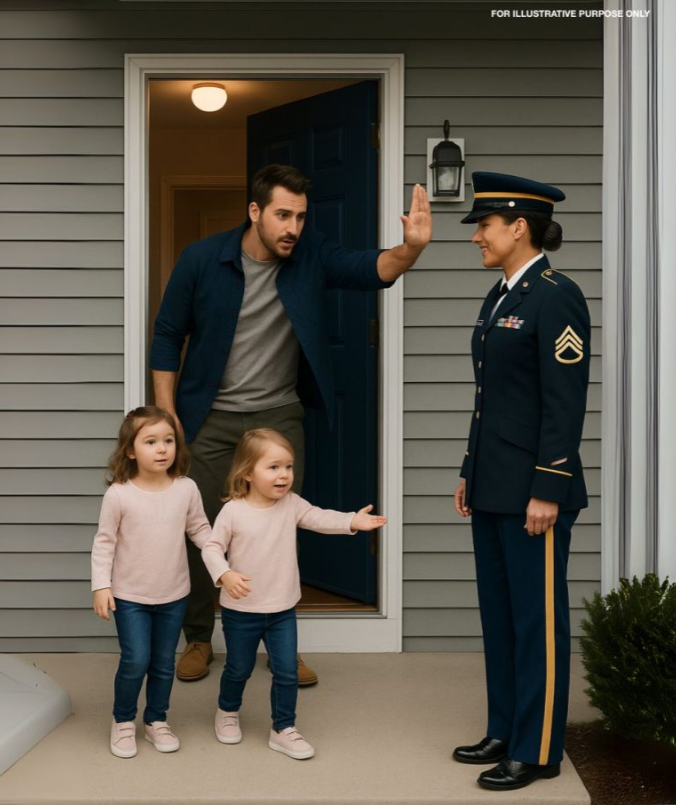
*“Don’t bother coming back. The locks are changed. The kids don’t want you. It’s over.”*
Three sentences. That’s how Derek ended fifteen years of marriage.
I froze at the arrivals gate, still in full dress uniform, medals gleaming across my chest, duffel slung over one shoulder. Around me, families collided in laughter and tears, but my world collapsed in silence. I had survived ambushes in Afghanistan, only to be ambushed at my own homecoming.
I typed back three words: *“As you wish.”*
What Derek never understood was that I’d been trained for betrayal. Three years earlier, before I deployed, my grandmother—Judge Cordelia Nash—warned me in her firm, judicial voice never to trust blindly.
“War changes everyone, Vera,” she said. “The ones who go and the ones who stay. Protect yourself and your children.”
So I did. I set up separate accounts for my combat pay, limited Derek’s power of attorney, and placed my grandmother as guardian in our family care plan. The house, purchased with my VA loan, was in my name alone. Derek had laughed at the paperwork. “You’re paranoid, Cordelia. Vera and I are solid.”
Now, staring at his message, I silently thanked her. Because I hadn’t only planned supply routes in Afghanistan—I had planned for this ambush, too.
My phone rang. Sterling Vaughn, my lawyer and former JAG officer, got straight to the point.
“Vera, Derek filed for divorce yesterday. Claims abandonment. Wants full custody and alimony.”
I steadied my voice. “Sterling, remember Operation Homefront? Execute it. All of it.”
“With pleasure, Captain.”
As I walked out into Tennessee sunlight, another message from Derek arrived: *“I’ve been seeing someone. Nadira gives the kids the stability you never could.”*
I dropped it into a digital folder already thick with evidence—six months of charges for jewelry and fine dining, screenshots of unanswered video calls, proof of his alienation tactics. The betrayal hadn’t been sudden; it had crept in like cracks across glass.
Two weeks before my return, I had even called home unexpectedly. Nadira answered. “I’m helping with the kids,” she said sweetly. Later, my grandmother confirmed seeing a moving truck unloading furniture at my house. Derek hadn’t just replaced me—he had erased me.
But he underestimated me. Logistics officers don’t hope for the best; we plan for the worst.
Sitting on a hard bench in the terminal, I made the call that changed everything. Sterling listened as I laid out every detail—legal documents, separate accounts, notarized care plans, the VA loan house in my name, untouched combat pay.
“Vera,” he said in awe, “you’ve outmaneuvered him completely. He thinks he set a trap, but you built the battlefield.”
That night, I stayed with my grandmother. She already had photographs of Nadira’s car in my driveway, notes from school counselors, evidence Derek had fed lies about me “abandoning” the children. My heart broke hearing that Brinn cried daily, Maddox picked fights at school, both told I’d chosen the Army over them. Derek’s betrayal wasn’t only marital—it was psychological warfare against my children.
“Execute Protocol Seven,” I told my grandmother: the emergency custody petition.
Meanwhile, Sterling froze accounts, filed motions, and launched a forensic audit of every dollar Derek had squandered.
By morning, Derek’s fury exploded across my phone:
*What did you do?*
*This is illegal!*
*Vera, we need to talk.*
His bravado had cracked. By afternoon, his lawyer was already begging Sterling to negotiate.
I answered calmly from my grandmother’s dining table, my children safe in her care.
“The accounts frozen were mine alone. The house? Legally sold to my grandmother. As for abandonment, Derek signed consent for every deployment.”
Sterling added, “Your client engaged in parental alienation, misused military funds, and moved his mistress into a soldier’s home. Shall I continue?”
Silence. Then: “What does Captain Holloway want?”
I didn’t hesitate. “I want my children protected. I want the divorce Derek filed. And I want him out of the house in seventy-two hours, or I press federal charges.”
At that moment, Maddox looked up at me, voice trembling. “Dad made us call Nadira ‘Mom.’ He said you weren’t coming back.”
I pulled him close. “But I did come back. I always will.”
Brinn whispered, “Daddy said you don’t love us anymore.”
Tears blurred my vision. “Sweetheart, every day I carried your photos in my helmet. Everything I did was for you—to keep you safe, to make you proud.”
On speakerphone, Derek’s lawyer finally gave in. “We’ll accept her terms. All of them.”
Six months later, the divorce was final. Derek left with nothing. Nadira left him soon after, when the money dried up.
Outside the courthouse, Derek sneered, “You prepared this all along. You knew I’d betray you.”
I looked him in the eye. “No, Derek. I prayed you wouldn’t. But I prepared in case you did. That’s what soldiers do. We hope for peace, but we prepare for war.”
That night, in our new, smaller home—ours alone—I tucked Maddox and Brinn into bed. Maddox had joined JROTC, inspired by my service. Brinn had written an essay called *‘My Mom, My Hero.’*
As I turned off her light, she asked softly, “Mom, were you scared when Dad sent that text?”
I kissed her forehead. “No, baby. Because I knew something he didn’t. Soldiers don’t just fight battles overseas. Sometimes the hardest battles are the ones we fight at home. And I’ve been trained to win.”