When I was twenty, a kitchen gas explosion left me badly burned. My face, neck and back were marked. After that, no man ever looked at me without pity or fear — until I met Obinna, a blind music teacher.
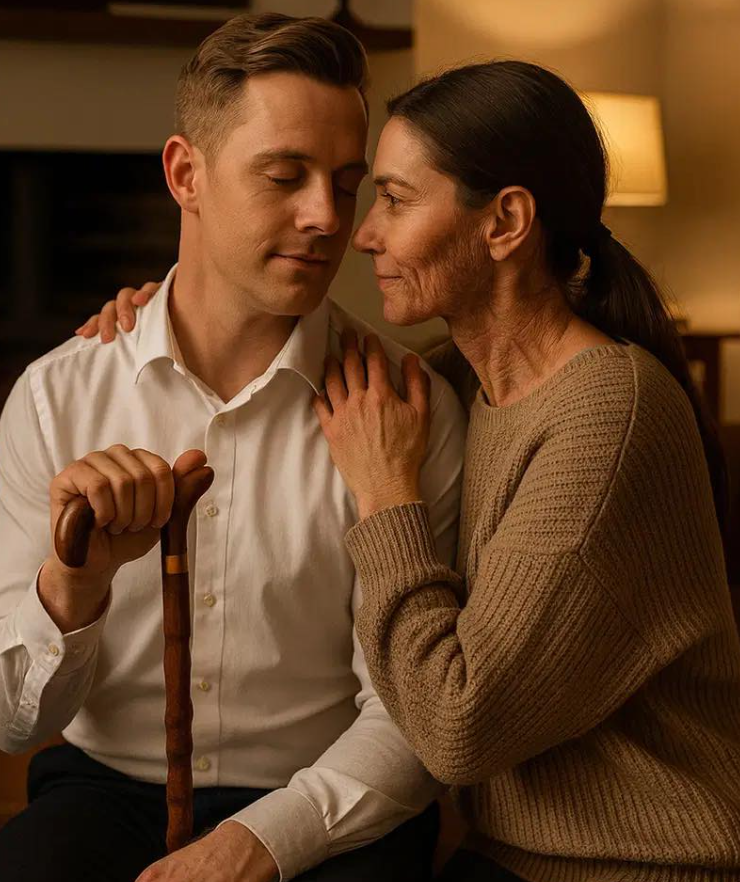
He only heard my voice. He didn’t see my scars. He heard my laugh, felt my kindness, and loved me for who I was. We dated for a year, and then he proposed.
People sneered. “You married him because he can’t see how ugly you are,” they said. I only smiled and answered, “I’d rather marry a man who sees my soul than one who judges my skin.”
Our wedding was simple and full of music — his students played for us. I wore a high-necked dress that covered everything, but for the first time in my life I wasn’t ashamed. I felt seen — not with sight, but with love.
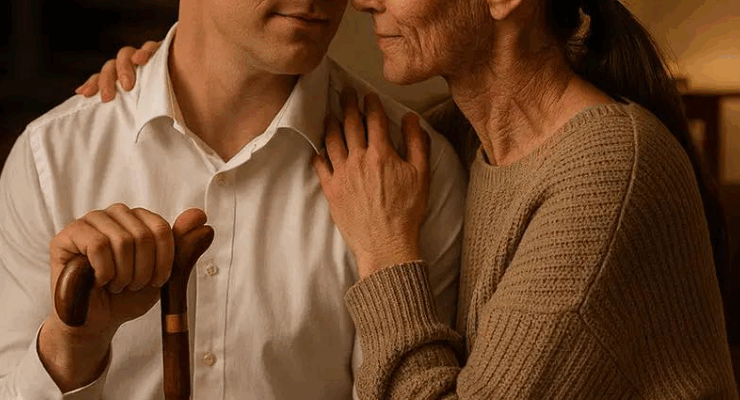
That night, in our small apartment, Obinna ran his hands slowly over my fingers, my face, my arms. “You are even more beautiful than I imagined,” he whispered. I cried. Then he added something that froze me.
“I’ve seen your face before.”
I stopped breathing. “Obinna… you’re blind.”
He nodded. “I was. Three months ago, after delicate eye surgery in India, I began to see—first shadows, then shapes, then faces. I didn’t tell anyone, not even you.”
My heart raced. “Why not?”
“Because I wanted to love you without the noise of the world — without pressure, without judgment. I wanted to be sure my heart still heard you louder than my eyes could see.” He paused. “When I did see you that night, I cried. Not because of your scars, but because of your strength.”
He had seen me — and still chosen me. His love hadn’t been born of blindness, but of courage. Today I walk with confidence, because I was seen by the only eyes that truly mattered: the ones that looked beyond my pain.
Episode 2: The Woman in the Garden
The next morning, sunlight filtered through the window as Obinna tuned his guitar. For a moment I forgot everything: the pain, the scars, the fear. I was a wife. I was loved. But his words — “I’ve seen your face before” — kept echoing in my head.
“Obinna, was that really the first time you saw my face?” I asked.
He set the guitar aside. “No. The first time I really saw you… was two months ago.”
I remembered the small garden near my office where I often sat after work — the place I went to cry and breathe and be invisible. “Where?” I whispered.
“There’s a bench by the path. I used to wait there after my therapies, listening to the birds and people. One afternoon I saw a woman wearing a headscarf. Her face was turned away. A child dropped a toy; she picked it up and smiled. The sun touched her scars, and I didn’t see scars — I saw warmth. I saw beauty amidst pain. I realized it was you when I heard you humming that tune you hum when you’re nervous.”
“Why didn’t you say anything?” I asked.
“Because I wanted to be sure my heart still heard you louder than my eyes could see,” he said. “You gave me a reason to open my eyes. Let me be your reason to keep them open, too.”
That day we walked to the garden hand in hand. For the first time I took off my headscarf in public. For the first time I didn’t flinch when the world stared.
Episode 3: The Photographer’s Secret
A week after the wedding, a photo album arrived from Obinna’s students — spontaneous shots from our day, wrapped in gold ribbon. I hesitated to open it. I didn’t know if I wanted to see what the world had captured beneath my high neck and practiced smile. But Obinna insisted: “Let’s see our love through their eyes.”
We turned the pages on the living room rug. The early photos made me smile: our first dance, his thumb on my palm, my veil billowing. Then we reached a picture that took my breath away. I stood by the window, eyes closed, sunlight soft on my face, a tear tracing my cheek. Under it, Tola — the photographer — had written: “Strength wears scars like medals.”
“That’s the one I’m going to frame,” Obinna said.
I asked for the smiling photo instead. He shook his head. “This one is honest. It reminds me how far you’ve come.”
That night I called the photographer. “Tola?” I said, nervous.
“You may not remember me,” she replied. “Four years ago at a market, I was pregnant and fainted. People walked past, but you helped me.”
I gasped. She continued: “I didn’t really see your face then — just your voice, your kindness. That stayed with me. When I saw you at the wedding, I knew I was photographing a woman who didn’t know how beautiful she really was.”
I hung up and cried — not from pain, but from healing. Every time I had felt invisible, someone had been watching and remembering.
And in the end, that was the truth that held me up: that even when the world couldn’t look, someone always had—heard me, noticed me, loved me.
Short, punchy version (for a headline or social post)
I married a blind music teacher because I believed he couldn’t see my scars. He loved my voice, my kindness, my soul. On our wedding night he whispered, “You are even more beautiful than I imagined”—and then told me he’d started seeing a few months earlier. He’d kept it secret so he could love me on his own terms. Later I learned a stranger had seen my strength long before I saw it in myself. It wasn’t blindness that blessed me — it was courage, memory, and a love that looked beyond skin.