Forty years ago my husband went out to buy milk—and never came back. Just when I had nearly stopped hoping, a single, anonymous note arrived telling me to go to the railway station. There he was: older, trembling, and carrying a story so unbelievable it would change everything.
That morning light had been soft and golden as it spilled across the kitchen table. I was at the sink, humming, when Michael slid his arms around me from behind.
“Good morning, beautiful,” he said, kissing my temple.
“Good morning, charmer,” I teased, flicking the dish towel at him.
Our son Benjamin, then four, was building a block tower in the living room. “Dad! Look at this!” he shouted, eyes bright with pride—his hazel eyes the spitting image of mine.
Life was simple and full.
“Do we need anything from the store?” Michael asked, handing little Dorothy to me.
“Just milk,” I said. “I can get it later.”
“Nonsense. I’ll grab it now,” he said, grabbing his jacket.
That was the last clear memory I have of him.
At first I didn’t worry—maybe he’d run into a neighbor, pick up a few extras. But an hour became two, then evening. My voice shook as I called the store. “Has anyone seen my husband?” The clerk’s reply felt like a blow: “No, ma’am. Not today.”
I checked with neighbors, friends, his boss. Nobody had seen him. By nightfall I was pacing, heart pounding. Benjamin tugged my sleeve. “Where’s Dad?” he asked.
“I… I don’t know, sweetheart,” I said, trying to sound sure. Panic lived under my calm.
The police came the next morning. Questions were asked, notes taken, promises made to “look into it.” Days blurred into weeks. I plastered missing posters everywhere: lampposts, shop windows, community boards. “Have you seen this man?” I would ask strangers. Benjamin clung to me; Dorothy, too young to understand, babbled “Da-da?”
As months passed, whispers circled. “Maybe he ran off,” someone said. “Maybe she drove him away,” another suggested. I clenched my jaw. Michael wouldn’t leave us.
Forty years of waiting followed—decades of hole-in-the-night searching, of birthdays and graduations and quiet, hollow mornings. I grew older without him. My hair silvered; my children grew up. Life continued around a space he had once filled.
Then, on a crisp autumn morning, I found a plain white envelope in the mailbox. No return address. Inside: three words in unfamiliar, bold handwriting—“Hurry to the railway station.”
My heart raced. Dorothy, now a grown woman, asked what it was. “I don’t know,” I said. But something in the stroke of the letters tugged at a memory. It wasn’t Michael’s handwriting, but it rang like a long-forgotten voice.
I went.
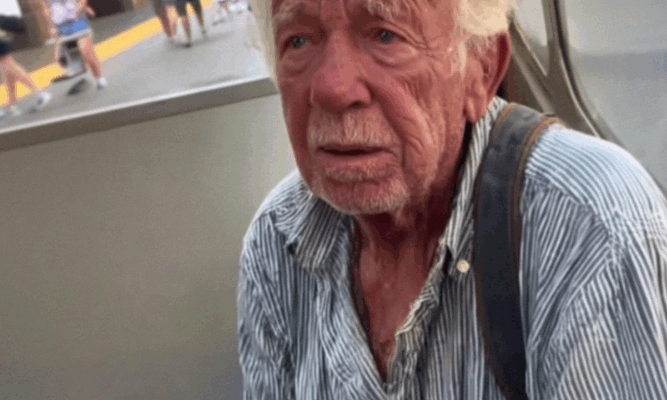
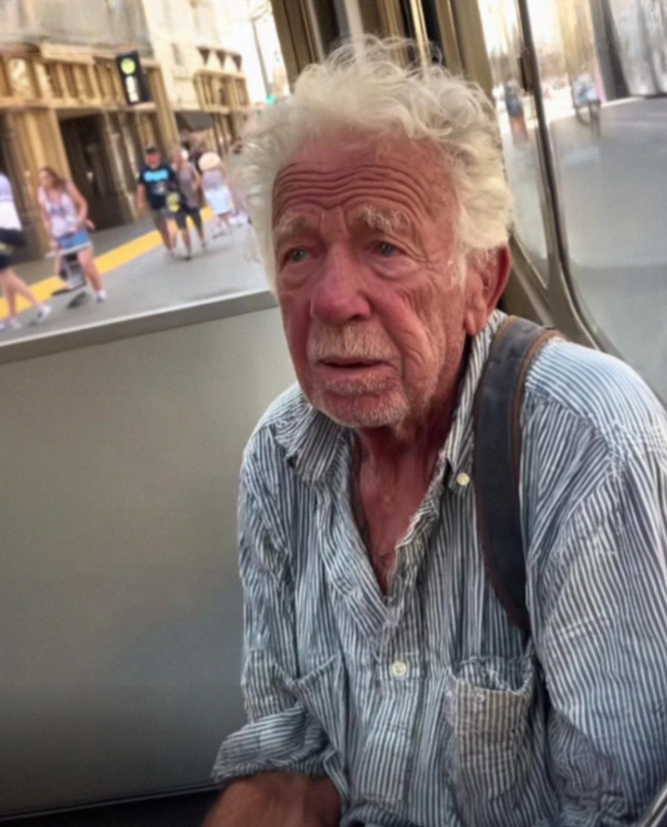
The station was a whirl of sound—suitcases rolling, announcements humming, the distant scream of a train whistle. Faces swept past in a blur until, at the far end of the platform, I saw him. He sat on a bench, hands clasped, white-haired and bent by time—but unmistakably Michael.
“Michael!” I called, and he looked up. Tears filled his eyes. He rose slowly.
“Clara,” he whispered.
We embraced as if no years had passed, holding each other like something precious reclaimed. When I pulled back, he mouthed the words I had waited forty years to hear: “You have no idea what happened to me.”
He told me then, in a voice thin from years of silence, of men who had grabbed him that day and forced him into a car—how a gambling debt had led to threats against our family. He said they forced him into their operations: smuggling, hard labor, whatever they demanded. He tried to escape. He failed. He feared for our safety—if he ran, they would come for us. So he stayed silent to protect us.
After years, a raid swept up their operation. Michael was taken—but not punished the way he’d feared. Instead, federal agents offered him a choice: work undercover to help dismantle the network. He accepted, not out of daring but to keep us safe. For decades he moved in the shadows, feeding information that slowly chipped away at the cartel’s hold. Last week, he said, the final arrests were made. It was over. He was free.
As he spoke, a man in a dark coat approached and showed a badge. “Clara, I’m Agent Carter,” he said. “Your husband’s story is true. His work was crucial. Without him, it would have taken much longer.”
Relief and anger rose in me at once. I turned back to Michael, tears on my face. “You should have come home sooner,” I said.
“I couldn’t risk you,” he answered, voice breaking. “Not then.”
We sat on the bench while the station noise moved around us. He reached for my hand—older, wearier, but his touch still familiar. “I never stopped loving you,” he said.
“You’re home now,” I replied. “That’s what matters.”
That evening we walked slowly down a quiet street, dusk painting the sky. The past could not be undone, and the future held uncertainties—how to rebuild years, how to explain what had been lost—but for the first time in forty years I felt a fragile peace.
“We’ll figure it out,” I said.
“Together,” he answered, and we kept walking, hand in hand.