Five years after I lost my wife, my daughter and I went to my best friend’s wedding. Everything I thought I’d buried came back the moment the groom lifted the bride’s veil. Alma — my little girl — leaned in and whispered, “Daddy, why are you crying?” The bride looked straight at me, and in that instant my world fell apart.
I hadn’t planned on going. It was my colleague Marcos who practically dragged me out, insisting I needed to “get out of this funk.” I’d been working double shifts on the construction sites for weeks; my body felt like it was filled with concrete.
“Just an hour,” Marcos said, pushing me out the door of an apartment in central Madrid. “If it’s awful, we leave. But just come.”
Funny how the biggest moments arrive when you least expect them.
The party was full of people who looked like they’d never lifted anything heavier than a glass of wine. In my worn jeans and an old T-shirt, I stuck out. Then I saw her — Lucía.
She shouldn’t have been there. Later I learned she’d only stopped by to drop something off for a friend. Our eyes met across the room and something clicked: a jolt, a connection. Whatever you call it, I wanted her in my life.
“Who’s that?” I asked Marcos, nodding.
He followed my gaze and whistled. “Lucía. Don’t even try it, man. Her family owns half of Madrid.”
I was already walking toward her.
She smiled when I approached, and that smile hit like a hammer.
“I’m Javier,” I said, offering my hand.
“Lucía.” Her voice was soft but sure. Her hand was small and the grip steady. “You look as uncomfortable here as I do.”
We talked until the night ended. She was nothing like I’d expected — no airs, no pretension, just warmth and genuine curiosity. By the time I walked her to her car I knew I was in trouble.
“My parents would hate you,” she said, moonlight catching her dark hair.
“Is that a problem?” I asked.
She looked at me with eyes that seemed to see straight through me. “Probably. But I don’t think I care.”
Six months later we were married. Her parents didn’t come to the wedding. They cut her off — no inheritance, no family events, nothing. Lucía squeezed my hand and said, “I don’t care about money. I just want you.” For a while, that felt like enough.
We moved into a small two-bedroom apartment. I worked the construction sites by day and studied architectural design at night; Lucía found a job at an art gallery. We were happy, or at least that’s what I believed.
Then Alma was born, and things changed. The light in Lucía’s eyes dimmed. She started comparing our life to the one she’d left behind.
“My college roommate just bought a house on the coast,” she said one evening as we ate macaroni across from the crib where Alma slept. “She invited us. I had to tell her we couldn’t afford it.”
“We’ll get there,” I said, absorbed in my floor plans.
“When?” she shot back. “When Alma goes to college? When we retire? I’m tired of waiting for the ‘someday,’ Javier.”
Arguments grew more frequent. She resented the budget constraints and the modest life. “This isn’t what I wanted,” she told me once. As if love alone should pay the bills.
“You knew who I was when you married me,” I reminded her during a particularly bitter fight.
“Maybe that was the mistake,” she replied coldly. “I thought you’d be more by now.”
The next day I came home early with flowers. The house was empty. Her suitcase and everything she owned were gone. In the crib was a single note:
“I want a divorce. I’m sorry, but our marriage was a mistake. I left Alma with Mrs. Martinez on the fifth floor. Keep her.”
I called her a hundred times. I went to her parents’ mansion begging to see her. The guard wouldn’t let me in.
“You’re not welcome here, sir,” he said, with something like pity.
Two days later the divorce papers arrived. Lucía had renounced parental rights. Her father’s lawyers handled everything with brutal efficiency.
Six months after she left, I called her mother on a whim and heard the words I never expected. “She’s dead,” Lucía’s mother said flatly. “Lucía was in a car accident. Don’t call again. You meant nothing to her.” Then she hung up.
I fell to the kitchen floor, crying until Alma woke and started crying too. They didn’t let me see Lucía’s grave. It was as if they’d erased her from existence.
I threw myself into work and into raising Alma. I finished my studies and began to design houses. People noticed the work. Within three years, I had my own firm. Alma grew into a bright, happy girl — stubborn and kind, with her mother’s dark hair and a laugh that could cut through anything.
Five years passed. The ache became a dull throb — ever present, but quieter. Then the invitation arrived. Esteban, my old friend, was getting married. We’d lost touch after he joined the army, but he wanted me there.
“Will there be cake?” Alma asked seriously as I packed a small bag.
“Yes,” I laughed. “A big, elegant one.”
The wedding took place at a seaside resort — white flowers, a salty breeze, the kind of day you think will stitch up old wounds. Esteban hugged me when we arrived. “Dude, look at you! And this beauty must be Alma.” She shuffled shyly, a flower tucked into her hair.
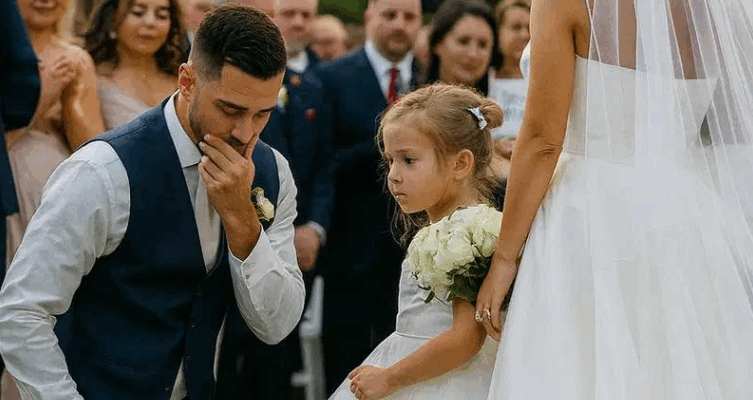
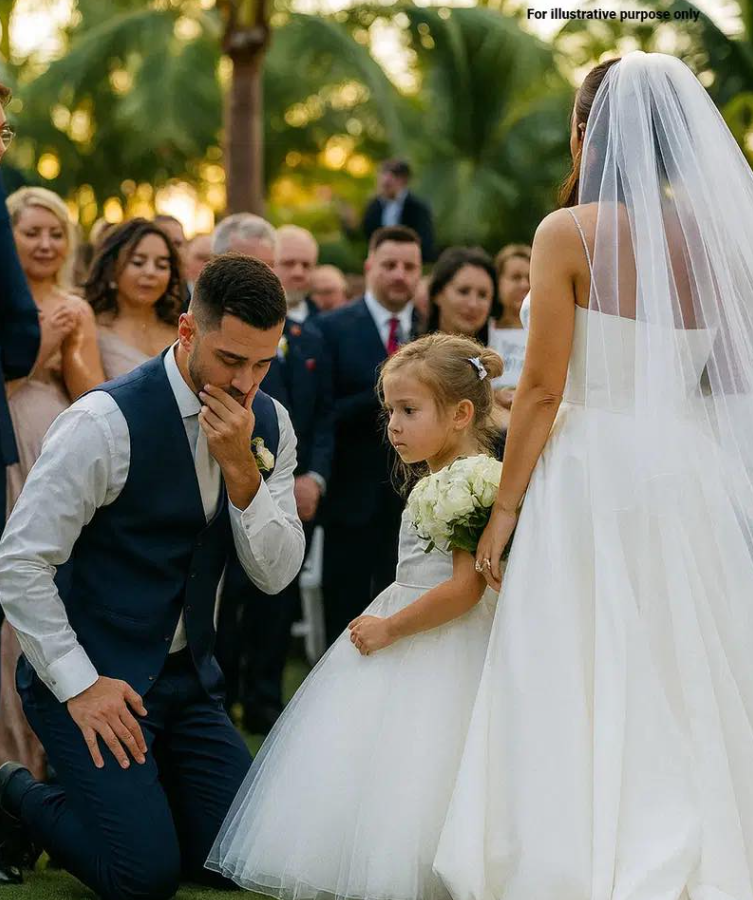
The ceremony was perfect. Alma sat beside me, swinging her legs and playing with the petals. Then the bride walked down the aisle, veil over her face. When Esteban lifted it, I stopped breathing. Tears came before I could think. Alma leaned in and asked, puzzled, “Daddy, why are you crying?”
The bride’s smile froze. For a breathless second I stared at the living ghost of Lucía in a wedding dress. Her eyes widened when she saw me and Alma. Then she bolted — she ran away from the aisle. Esteban called after her, bewildered, but she’d already disappeared.
Later, when the dust settled, I understood something: the worst wounds fade not from forgetting but from building. I had taken the worst of it and built something honest and beautiful in its place. “Keep her,” she had written once. I had kept Alma; I’d kept a life.
In the end, the best revenge wasn’t a triumphant act. It was a quiet, steady life — a life where my daughter grew up whole, where my work mattered, and where love, imperfect and stubborn, was enough.