The Forgotten Day
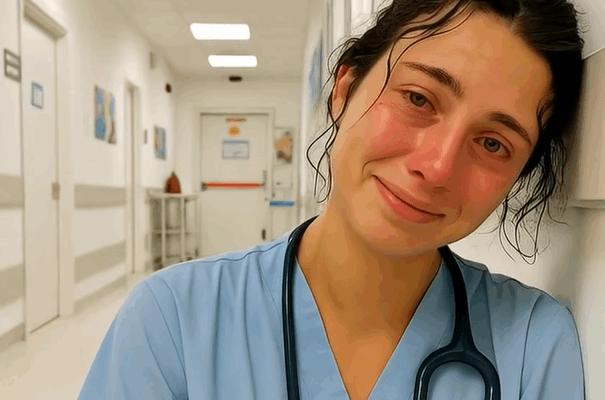
I turned thirty-one under the humming fluorescent lights of the supply room, tearing open a sterile gauze pack with hands raw from scrubbing. My name’s Anna—brown hair in a messy knot, exhaustion written in the lines around my eyes.
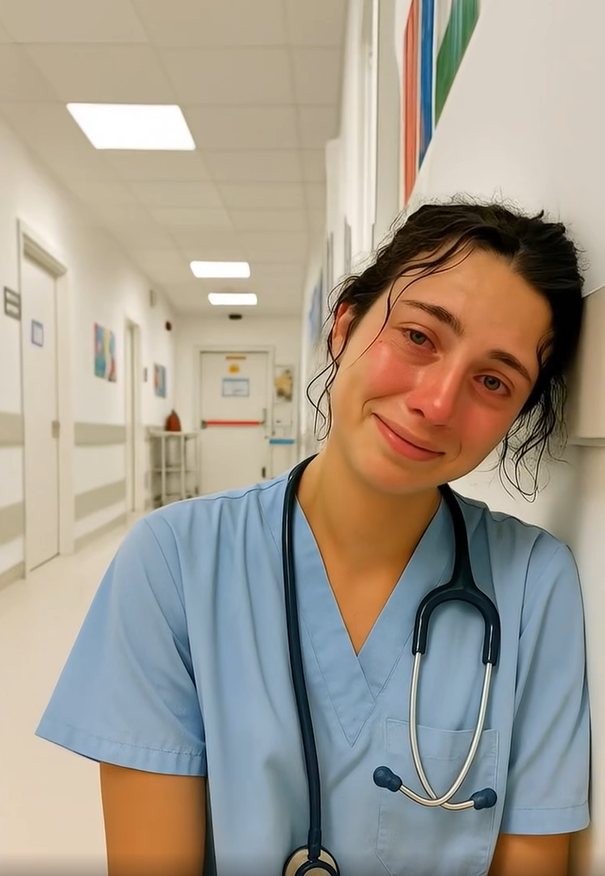
There were no balloons, no calls. My phone was dead—I’d left it uncharged after a long shift and a quiet cry in the car. I hadn’t told anyone. I didn’t want sympathy. Still, I’d hoped someone would remember. My mother always did. This year she didn’t. Not even Léonie, who once baked me a carrot cake during residency.
I dabbed on blush before rounds. I stocked extra coffee pods for the break room. I smiled at the old man in 403 who kept calling me “nurse,” though I corrected him three times.
Around the tenth hour, while I pressed on a post-op bleed, a woman I didn’t know tapped my shoulder. “You’re Dr. Anna, right?” she asked. I nodded. She handed me a brown paper bag with my name scrawled on it.
“There’s a note inside,” she said, then vanished down the hall.
I opened it and froze. The handwriting was my mother’s. She’d been gone seven months. I remembered the flatline, the DNR papers, the purple shawl that still smelled of her rose soap.
My hands trembled as I read the note:
“Happy Birthday, sweetheart. I knew this one might be hard. I asked someone kind to deliver this. Love you always—Mom.”
My knees gave out. Inside the bag: a small tin of lemon cookies—her recipe—and a Post-it with a phone number signed “Jinny.” I didn’t know anyone by that name.
At home that night I charged my phone. No messages—just a spam coupon for socks. The Post-it burned a hole in my pocket. I dialed.
“Hello?” came a warm, gravelly voice. “Hi—this is Anna. Did you give me a bag at St. Columba’s today?” I asked.
“Yes,” she brightened. “I hoped you’d call.”
“How did you know my mom?” I said.
“She was in the hospice garden. We talked. She told me about you—how proud she was. She wasn’t sure she’d make it, so she asked me to deliver the bag. Said you’d be too stubborn to take the day off.”
She was right.
Over the next weeks I visited Jinny often. She’d been a nurse too, now volunteering—arranging flowers, sitting with patients through long nights. She gave me crossword puzzles, candies in wax paper. Sometimes we spoke of my mother. Sometimes we didn’t.
One afternoon she handed me a photograph—my mother on a stone bench, smiling at something out of frame. “This was the day she gave me the bag,” Jinny said. “She told me to tell you one thing, if you ever needed to hear it.”
I braced. Jinny’s voice softened. “‘Tell Anna she was always enough. Even on the days she felt she wasn’t.’”
The tears came before I could stop them.
Slowly, I began to stitch myself back together. I started baking—lemon cookies, mostly—and left them in the nurses’ break room with silly notes. I laughed when a teenage daughter hugged me after her father’s surgery; she smelled like cheap shampoo and hope.
Then Léonie reached out: “I’m the worst friend. You were in my dream last night. Are you okay?” She’d been drowning—her mother’s early Alzheimer’s and her own exhaustion. She hadn’t forgotten; she couldn’t face the day. We talked for hours, met for dinner. She brought a single carrot cupcake with one candle. “You get a redo,” she said. I blew it out. No wishes—just breath.
Three months later Jinny’s nephew called: “She passed away last night. She talked about you a lot.” I sat in the locker room and cried. At the memorial he gave me an envelope in Jinny’s handwriting:
“Dear Anna,
Kindness has long legs—it walks farther than we think. Your mom knew that. So do you.
Keep walking.
Love, Jinny.”
The following year I took my birthday off. I baked lemon cookies and walked them to the volunteer station. There was a new woman—Graciela—who’d lost her son the year before. She liked crosswords and chamomile tea. We sat in the hospice garden, and I told her she wasn’t alone. She wiped her eyes; I handed her a cookie that tasted like sunlight and memory.
If you’re reading this and feel forgotten, believe me: someone is thinking of you. Maybe not loud, but deeply. Kindness circles back—always.